



User-Focused Engineering: Safety Matters
When mapping the journey for an electronic toy, safety is always the primary concern. Before sketching a circuit, engineering teams must consult strict international regulations such as ASTM F963 or EN71. It is important to add features such as secure battery compartments with screws, over-current protection, and low-voltage cutoffs to prevent dangerous battery discharge.
Choking hazard avoidance is not just a checklist, it is part of every design review, from prototype to final product. Interactive features like sound, lights, and motion sensors boost the fun, but should not overwhelm. Too-bright LEDs or loud buzzers can quickly cross the line, especially for younger users.
Align features with children’s developmental stages: toddlers benefit from large, soft switches, while older children enjoy more advanced inputs like touch sensors and simple displays. Every feature must be purposeful, intuitive, and accessible.

Successful toy engineering blends developmental psychology with electrical know-how. When this balance is missed, even the cleverest gadget risks becoming a shelf ornament.
Prototype Workflow: Rapid Testing and Integration of Core Electronics
Speed and iteration matter most in modern toy design. Begin with rough sketches, then move swiftly to breadboard circuit layouts. Breadboards are ideal for proof-of-concept because they allow instant swapping of motors, microcontrollers, LEDs, and buttons. Color-coding wires is not just for neatness, it saves hours during troubleshooting.
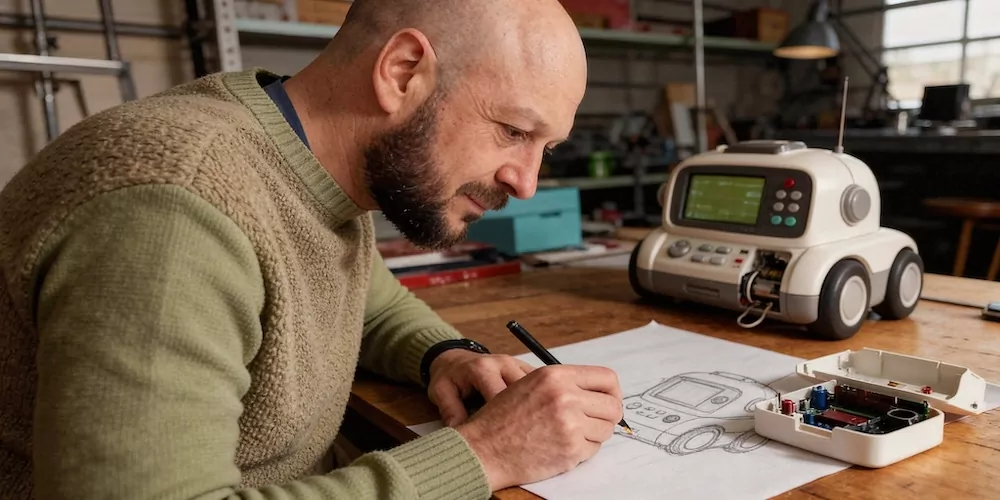
Sketch each prototype assembly and note weak points, like loose jumpers or overheating chips, directly on your drawings. After dialing in core electronics and user interface, move to “works-like” prototypes on perfboard, then to a “looks-like” enclosure where form and function finally meet.
- Perform drop tests from short heights.
- Complete usability tests with real children.
- Run electromagnetic compatibility (EMC) scans against interference.
Careful documentation of each failure, whether it’s a loose wire or fast battery drain, builds a troubleshooting guide for future improvements. Each workflow step brings teams closer to a toy where fun and durability meet, all while keeping an eye on costs and timelines. For teams moving from breadboards to production-ready PCBs, exploring hardware engineering methods is a smart way to ensure reliable, safe assembly on the factory line.
Final Refinement, Testing, and On-the-Shelf Readiness
Before an electronic toy ever shines its LEDs on store shelves, it must clear a battery of final tests. Certification is essential: passing safety and reliability checks for electrical shocks, overheating, and interference is mandatory for market entry in many regions. CE marking in Europe and UL in North America provide legal proof of compliance.
Testing extends to the real world. Children and parents engage with pre-production samples to spot interface confusion or uncover hidden gems. For inclusive play, engineers test alternative controls like larger buttons, tactile cues, or high-contrast designs for kids with different abilities.

Blending engineering rigor, child-focused thinking, and creativity is the only way a toy becomes both a shelf standout and a childhood favorite.
Core Principles of Electronics in Toy Design
Electronic toy design begins with rigorous safety, both as a responsibility and a requirement by global standards. Toys must comply with regulations such as ASTM F963 or EN71, dictating battery security, electrical safety, and prevention of choking hazards.
- Sealed battery compartments accessible only with tools
- Physical shock protection and correct part sizing
- Controls suitable for the user’s age and hand strength
User interface is just as crucial as the circuitry. Big, tactile switches invite play, while LEDs and sound modules create engaging feedback. Intuitive controls mean that even the youngest users can enjoy the toy without needing a manual.
Modern features like motion sensors, capacitive pads, and simple speech playback can now be included cost-effectively via basic circuits. Each function, whether it’s clapping to activate a robot or waving to activate a night light, must survive drops, spills, and curious hands.
Inside, the “brain” may be an off-the-shelf microcontroller like an Arduino or ESP32, though production runs may require custom PCBs. The logic circuitry manages all functions, balancing fun and reliability.
How to Integrate Key Electronics Into Your Toy Prototype
Turning a creative idea into a functional toy requires practical prototyping. Breadboards remain the standard for electronic debugging and feature tuning. They let engineers rearrange LEDs, drivers, buzzers, and sensors without worrying about soldering errors.
The process usually starts by translating sketches into assembly diagrams, marking spots for each core part, including power switches. Early breadboard tests can reveal common problems like noisy sound, component interference, or quick battery drain.
- Transfer working breadboard layouts to perfboard or a custom PCB
- Color-code wires and keep cables short and neat
- Test with tools like a multimeter or oscilloscope to catch faults
- Drop, twist, and shake the prototype to ensure lasting build quality
Mechanical design matters, too. Use CAD to model enclosures for snug fits and circuit protection. 3D printing can speed up prototyping and help add shock-absorbing or waterproof features. Choose domed buttons or conductive rubber pads for durable interfaces, and favor modular layouts for easier repairs or recycling down the line.

Logs, annotated photos, and notes prove invaluable when it’s time to move from prototype to hardware development at scale. At AJProTech, every stage is a challenge and a puzzle meant to delight both children and the next generation of engineers.
Sophisticated Toy Design and Manufacturing Process
Turning a smart toy idea into a market-ready product feels like a strategic chess match: each step calls for careful planning and anticipation of challenges. Manufacturing preparation starts with reviewing safety standards. Before moving into tooling and supplier negotiations, it’s essential to align your design and production plan with strict safety and manufacturing requirements, especially for products intended for children.
- Follow regulations such as ASTM and EN71 for materials, electronics, and labeling to ensure compliance across key markets and avoid costly redesigns or recalls later.
- Choose small screws instead of snap latches to prevent easy access to batteries or internal components, reducing choking and electrical hazards.
- Select certified, child-safe battery components (including overcharge and short-circuit protection) and work only with suppliers that can provide full compliance documentation.
- Design for manufacturability and testing at scale, ensuring that safety features remain consistent during mass production and can be easily verified through quality control checks.
While early models may look playful, mass production is a serious business. Choose plastics for strength and safety, and finishes that stand up to repeated play. Design should always consider modularity. For example, standard battery holders help avoid future headaches in assembly or repair.
Always weigh your budget. Sensors, motors, and switches may fulfill dreams but stretch costs. Design for Manufacturability (DfM) merges creative toy thinking with systematic engineering, making each part easy to produce and test. Use both digital and physical prototypes to edge out errors and confirm that every interactive feature will work at scale.
The overall process must be mapped out to align electronics with factory needs and available skills. Failing to plan here leads to production setbacks: nobody wants a warehouse full of silent, unused robots.
Packaging and Presenting Electronic Toys for Market
A clever toy needs smart packaging to shine on store shelves. Packaging must do more than impress. It protects, informs, and sometimes even extends the play.
- Packaging must survive shipping and handling while keeping circuits safe.
- Eco-friendly packaging (recycled cardboard, minimal plastics) is increasingly important.
- Compliance labels like CE or FCC must be clear, not overwhelming.
- Instructions, battery warnings, and age grades are essential for parents and legal compliance.

Demo windows on packaging let shoppers activate lights or sounds, increasing the “wow” factor. Some packages even transform into part of the play set, like fold-out playmats or cases, boosting loyalty and delight. An enjoyable unboxing experience signals quality and sparks future adventure.
For a deeper dive into combining play, electronics, and industrial design, our mechanical design guide offers more insight.