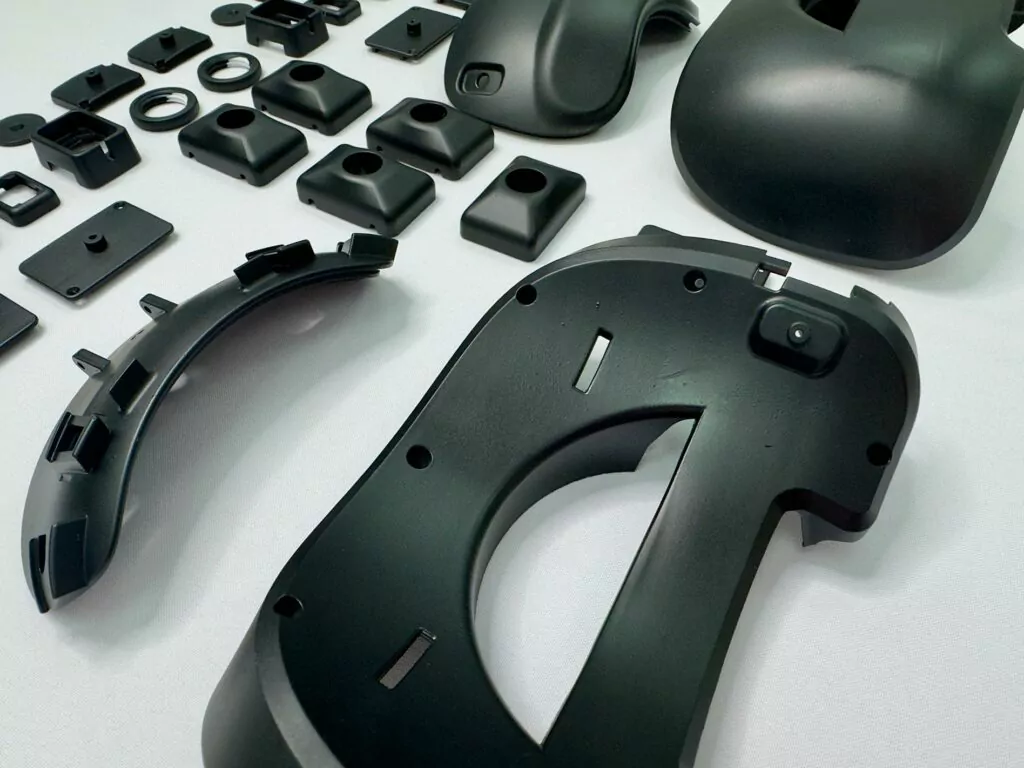


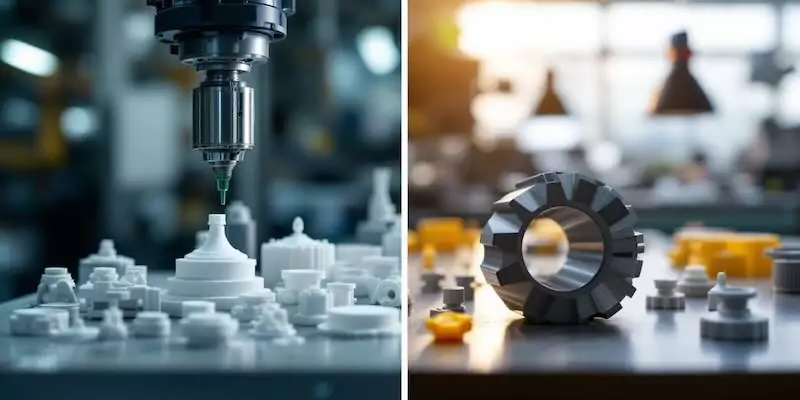
Injection molding and 3D printing differ most dramatically before the first part is ever made. Injection molding requires significant upfront investment in tooling, with lead times that can stretch from weeks to months. Once the mold is cut, design changes become costly and slow, effectively locking in decisions early.
In contrast, 3D printing removes tooling entirely, allowing teams to move directly from CAD to physical parts and iterate rapidly. This makes it especially valuable during early development, when designs are still evolving and assumptions need validation.
The key tradeoffs come down to:
- Lead time: molds take weeks or months, printed parts can be produced in hours or days
- Flexibility: injection molding locks designs early, 3D printing supports fast iteration
- Risk & cost: tooling errors are expensive, print changes are low-risk and inexpensive
- Momentum: waiting on a mold can stall teams, printing keeps development moving
At AJProTech, we see the biggest advantage when teams delay final tooling decisions until feasibility and market fit are proven. Using 3D printing early allows faster learning, earlier error detection, and better-informed design choices, while injection molding becomes most effective once the product is stable and ready to scale. Choosing the right process at the right stage often matters more than per-part cost alone.
Volume Break-Even and Cost Analysis
When it comes to cost, injection molding only wins when volume is high enough to justify the upfront tooling investment. Even simple molds can cost $8,000-10,000, and complexity quickly drives that higher.
At scale, these costs are amortized and per-part pricing drops sharply, but only if production reaches the break-even point. For many plastic parts, that threshold may fall in the 3,000-6,000 unit range, and even higher when tolerances, materials, or surface finishes are demanding. If demand stalls or designs change before that point, tooling costs turn into sunk losses that directly pressure margins.

From a cost and volume perspective, the core differences are:
From a cost and volume perspective, the core differences are:
| Injection Molding | 3D Printing | |
| Upfront investment | Requires expensive tooling, often $8,000-10,000+ depending on complexity | No tooling cost, pay per part |
| Break-even point | Becomes cost-effective only at high volumes (typically 3,000-6,000+ units) | No break-even threshold, cost scales linearly |
| Design flexibility | Design changes require mold rework or new tooling | Design changes handled digitally with minimal cost |
| Inventory risk | Encourages large batch production and stored inventory | Supports on-demand production with minimal excess |
| Financial risk | High sunk cost if demand shifts or design changes | Lower risk, spending tied directly to actual output |
3D printing shifts financial risk in a different direction by tying cost directly to output. You pay for exactly what you produce, whether that’s 10 prototypes or 200 short-run parts, and you avoid the danger of obsolete inventory or stranded tooling.
At AJProTech, we often guide teams to delay tooling until demand, design stability, and regulatory requirements are clearer. In the real world where forecasts change and products evolve, choosing the manufacturing method that protects cash flow and optionality can matter more than chasing the lowest theoretical cost per part.
Material Selection and Performance for 3D Printing and Injection Molding
Resin, Additive Manufacturing, and Mechanical Properties
The real difference between injection molding and 3D printing often shows up in material behavior and mechanical performance, not just speed or cost. While both processes may reference familiar plastics like ABS, polycarbonate, or nylon, the end results are not equivalent.
Injection molding forms dense, uniform parts by forcing molten thermoplastics into metal tools under high pressure, creating consistent strength and durability throughout the part. Additive manufacturing, by contrast, builds parts layer by layer using filaments, powders, or liquid resins, each with its own limitations.

Even when material names match, chemistry, bonding, and long-term performance can differ significantly.
From a materials and mechanical standpoint, the core differences are:
- Strength & consistency: injection molded parts form a continuous plastic matrix, printed parts may have weaker inter-layer bonds
- Material selection: molding supports a wide range of commercial, filled, and reinforced thermoplastics, printing options are narrower
- Durability: molded parts handle heat, UV, chemicals, and fatigue more reliably
- Post-processing: 3D prints often require curing or finishing that can affect properties, molded parts are production-ready
At AJProTech, we design with this tradeoff in mind. 3D printing is invaluable for rapid prototyping and early testing, but injection molding remains the gold standard for end-use parts that must survive real-world stress over time. Many successful products rely on both, using additive manufacturing to validate form and function, then transitioning to injection molding once material performance and longevity truly matter.

Design Complexity and Limitations in Part Design
The choice between injection molding and 3D printing fundamentally shapes what your design can and cannot be. Additive manufacturing enables complex geometries that would be impractical or impossible to mold, like internal channels, lattices, undercuts, variable wall thickness, and hidden features are all fair game. This freedom makes 3D printing ideal when designs are still evolving or when geometric innovation is central to the product.
Injection molding, on the other hand, imposes strict geometric rules dictated by tooling, ejection, and material flow. Designs must accommodate draft angles, uniform wall thickness, and tool-friendly features, trading creative freedom for long-term production stability.
From a geometry and design-risk perspective:
- 3D printing supports complex internal features and rapid design changes, but parts may be directionally weaker and require post-processing
- Injection molding demands disciplined, tool-compatible geometry, with major design changes becoming expensive after tooling
- Scalability favors molding once geometry is finalized, complex 3D prints grow costly and inefficient at volume
We at AJProTech have seen clients gain weeks or months by mapping their part design methodically, and working with the realities of each process instead of fighting them. For more on how this design-fabrication dance affects your business, our industrial and mechanical design team always has wisdom to share.
Prototype Development and When to Use Each Method
When speed and learning matter most, prototype development becomes a sprint. In these early stages, delays caused by tooling, logistics, or high upfront costs can stall momentum and increase risk. This is where 3D printing excels.
Additive manufacturing allows teams to move directly from a digital model to a physical part, making iteration fast, inexpensive, and low-risk. Design changes are software updates, not capital expenditures, which encourages experimentation and rapid learning. Injection molding, by contrast, demands early certainty.
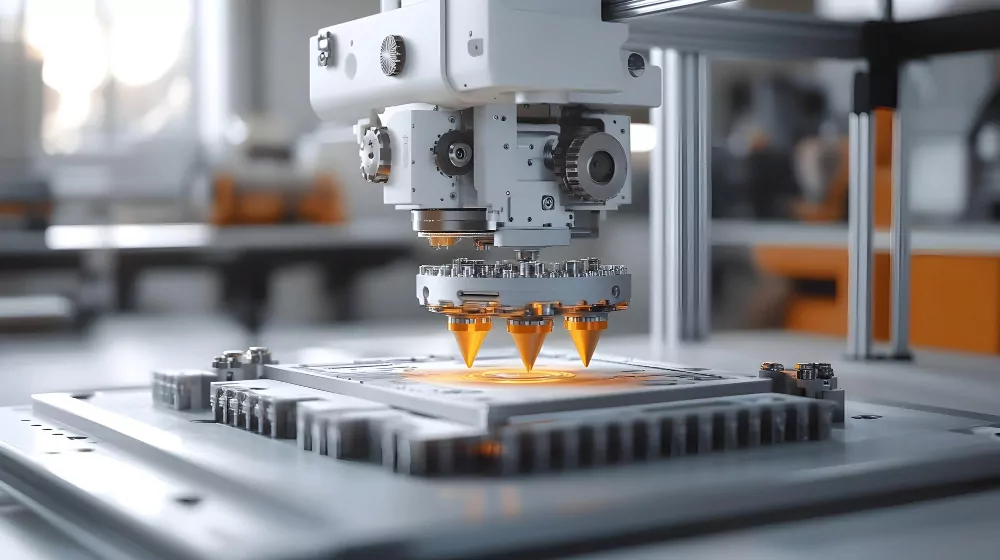
Tooling requires weeks or months of preparation, along with significant investment in DFM reviews, machining, and trial runs. For a design that is still evolving, this rigidity can turn small mistakes into costly setbacks.
In prototyping and early development, the tradeoffs are clear:
- Speed: 3D printing enables same-day or next-day prototypes, injection molding has long lead times
- Iteration cost: printed revisions are inexpensive, mold changes are slow and costly
- Design maturity: printing supports exploration, molding requires near-final geometry
- Risk profile: additive manufacturing absorbs failure cheaply, tooling amplifies mistakes
While injection molding is unmatched for high-volume production, it struggles in environments that demand frequent change. Undercuts, lattice structures, and rapid geometry tweaks are either impossible or prohibitively expensive once a tool is cut. This often forces teams to “freeze” designs too early, discovering issues only after committing to production tooling.
At AJProTech, we typically guide teams to use 3D printing for proof-of-concept builds, fit and assembly checks, and early user validation, then transition to injection molding only once the design, requirements, and market assumptions have stabilized. This phased approach reduces opportunity cost, preserves agility, and ensures that when tooling begins, it’s supporting a design that’s truly ready to scale.