

How Is Edge AI Different from Cloud-Based AI?
Picture walking into your living room as your smart speaker greets you by name. Not because it checked with a powerful, faraway cloud, but because it recognized your voice right there, without ever sending your sound data into the digital wilderness. That’s Edge AI in action.
At its core, Edge AI brings artificial intelligence, like machine learning and data analytics, out of the cloud and onto your device, whether that’s a camera, smart thermostat, medical wearable, or an industrial sensor keeping a mechanical giant humming.
Here’s what makes Edge AI tick: the trained “brain” behind the predictions and automation runs right on your edge device. There’s no travel time for data, no dependence on spotty Wi-Fi, and no risk of your privacy wandering into the cloud.

Edge AI is game-changing when time is critical or privacy is a must. If a smart vehicle’s camera took a detour to cloud servers before braking, you’d probably need a new bumper. In hospitals, doctors rely on devices that sound the alarm instantly, even when Wi-Fi is down.
Edge AI vs. Cloud AI: Key Differences
Let’s compare Edge AI and Cloud AI. Both use AI models, but they work in different “arenas.” Cloud AI relies on armies of servers and huge data sets. It’s great for big tasks like training complex machine learning models, crunching massive data, or powering advanced generative AI. Your smartphone or sensor can’t compete in raw computing, but it’s perfect for fast, local decisions.
- Speed: Cloud AI often suffers from network delays. Data travels from your device to a server, gets processed, and then returns with a result. This delay is a problem for safety-critical tasks, like stopping a hazardous conveyor belt. Edge AI, by processing the data directly on the device, cuts response time from seconds to milliseconds, perfect for smart surveillance, connected vehicles, or even detecting thirsty crops.
- Bandwidth: Cloud-based systems require sending lots of data to the cloud. Edge AI sends only what matters: anomalies, alerts, or summaries. This lowers costs and stress.
- Privacy: With Edge AI, much of the data stays local. Sensitive information stays in your pocket and avoids exposure to the web, which meets privacy rules and builds customer trust.
Of course, Edge AI isn’t the answer for every workload. Complex AI model training still belongs in the cloud, where there’s more power. Ultimately, it’s not edge OR cloud, it’s edge AND cloud working together. Real-time decisions occur at the edge; deep learning and ongoing training happen in the cloud.
Edge Computing and Edge Intelligence Explained
Edge intelligence means handing more “smarts” to the device:
- AI models are trained in the cloud, where processing is cheap and easy.
- They are then compressed or optimized for edge deployment. Techniques like pruning, quantization, and federated learning help models fit even modest hardware.
- The device runs these models, staying fast and efficient while offering near-instant feedback.
This lets Edge AI devices, from fitness trackers to industrial sensors, be more than just connected. They become insightful, autonomous, and able to learn from their environment.
Benefits of Edge AI for Smart Devices
When AI models operate directly on edge devices, like cameras or wearables, there’s no need to send data far away for analysis. The decision moves from data centers to the device, slashing delays and making responses almost instant. Traditional cloud AI systems can’t match this speed and reliability, where an instant reaction can prevent disaster.
- Engineers optimize AI models for the edge using methods like compression and quantization. This means they use less power, memory, and space, while staying accurate.
- Quantization lets neural networks run on modest microcontrollers.
- In factories, Edge AI applications detect faults by reading sensor data thousands of times per minute and can predict failures before a human spots a problem.
Privacy, AI Security, and Resilience
Edge AI brings privacy to the forefront, not just as a buzzword but a practical reality. Sensitive data can be processed on-device, drastically reducing exposure.
However, Edge AI introduces new risks:
- Physical tampering (someone stealing your edge camera or device).
- Hackers attempting to extract AI models directly from the device.
Strong encryption, secure boot, and anomaly detection can help reduce these risks. We at AJProTech stress robust hardware security making it tough for attackers to tamper or extract secrets. Still, constant vigilance is required.

Resilience is another strength: an edge device doesn’t rely on the cloud and keeps working even during outages or in remote areas. For instance, a smart home device can spot if you left the stove on and won’t freeze just because your neighbor cut the fiber cable.
Cost, Bandwidth, and Scalability
Anyone who’s paid a cloud bill knows relying on remote servers gets expensive, especially as more devices come online. Edge AI changes this:
- Edge devices process data locally, only sending the most important results to the cloud. This reduces bandwidth costs and allows devices to function in areas with unreliable connectivity.
- With hundreds or thousands of sensors, saving a few megabytes per device quickly adds up. Less data also means fewer opportunities for costly data breaches.
- Scalability is built-in: adding more Edge AI devices doesn’t mean buying more servers. Instead, intelligence is distributed, creating a responsive, decentralized network.
| The challenge is balancing hardware costs with Edge AI’s benefits. Advanced chips or storage can nudge up prices, but as hardware gets cheaper and AI models shrink, the advantages far outweigh the costs. If you want more practical detail, including case studies, pitfalls, or tips, see our IoT development page. |
Challenges for Edge AI Computing
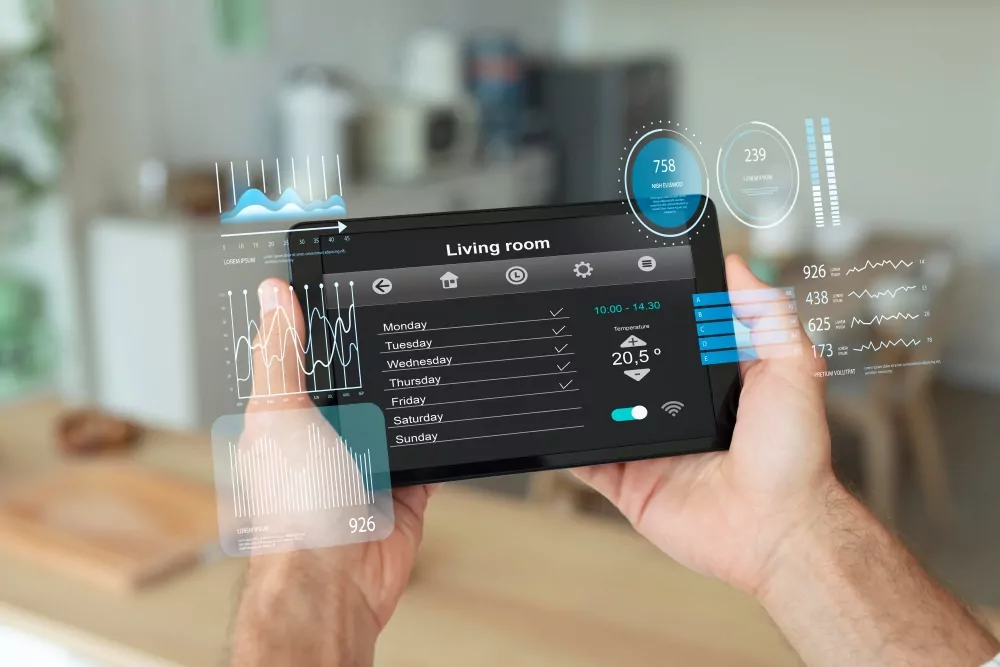
When cameras spot an intruder or a wearable counts your steps in the yard, Edge AI is at work. But there are hardware limitations: space, power, and heat management. Most edge computing devices have less power than even a typical smartphone, let alone a server.
Enter AI accelerators: neural processing units (NPUs) or GPUs for the edge take the heavy load off the main processor. Using specialized instruction sets, accelerators can support advanced functions on-site, so smart home assistants and security systems work with no cloud.
But it’s a balancing act. Chip designers shrink AI models using quantization, pruning, and distillation so models fit on limited resources. Squeeze too hard and your model gets less accurate. For complex applications, hybrid solutions shine: edge handles fast, local inference, and the cloud steps in for deep analysis only when needed.
Integrating Edge AI with Existing Infrastructure
Most processes and sensors weren’t built for AI at first, and legacy systems may resist change. But the lure of on-site, instant analytics, like reducing downtime or catching bad products, overcomes most hesitation.
Key steps in integration:
- Focus on interoperability: new Edge AI apps must “talk” with existing controls, data formats, and protocols.
- Tools allow deployment of small AI models to all sorts of devices, both old and new.
- Security is paramount. Decentralized decision-making brings new threats: think USB sticks or even wildlife causing mischief. Teams must plan for local encryption, strong firewalls, and regular software updates to protect every outpost.

The Future of Edge AI and Advancements in AI Computing
Edge AI is moving beyond buzzwords and into daily life. Smarter edge devices are blending the lines between science fiction and the everyday. These gadgets don’t depend on the cloud, they process and “think” locally. For users, that means instant responses from security cameras, and fast warnings from industrial sensors before a breakdown.
This progress faces real constraints: memory, power, and heat. Innovations like model compression, binary neural nets, and new chipsets help Edge AI digest workloads quickly and quietly, sending only urgent info to the cloud. The future sits where silicon smarts meet real-world reliability.Looking ahead, Edge AI could change how businesses build and run tech. At AJProTech, we’ve seen Edge AI transform real-world projects: R&D now feels like live field-testing, getting fast feedback from real environments. If you’re considering Edge AI, start with a feasibility study to see how it works for your needs, on budget, and on site.