


For modern IoT deployments, keeping the lights on (metaphorically, and sometimes literally) is not just a technical necessity, it’s the key to managing costs and running systems reliably. Failure in power management leads to more than just dark corridors: field failures, costly maintenance, and lost data can stop innovation in its tracks. Energy, after all, is the quiet hero behind every clever sensor.
The stakes begin with deployment scale. Picture thousands of IoT devices scattered across hard-to-reach places. Maintaining sprawling networks demands a core design principle: “minimize power and optimize every microamp.”
- Leaders in logistics, agriculture, and environmental science depend on accurate energy consumption estimates to plan for growth.
- A well-managed battery outlasts its peers, reduces maintenance, and prevents late-night alarms from exhausted devices.
Is it best to enable rapid transmit cycles, or should data be buffered and sent less often? Each trade-off affects the balance between user experience and maintenance burden. With every module or sensor added, engineers perform a delicate balancing act.

From a business perspective, every watt-hour saved has a real financial impact. Consider the IoT product development process: investments in power-optimized design up front yield significant returns in the field.
Key Challenges in Power Management for IoT Devices
Balancing IoT Device Power Consumption and Operational Life
Optimizing power management in any IoT deployment is not just a technical challenge, it’s a business imperative. We at AJProTech have witnessed that even minor inefficiencies in energy usage can escalate costs and complexity across an entire device fleet.
Long battery life requires collaboration between hardware and firmware:
- Hardware designers choose components for ultra-low power, such as microcontrollers that sip current while sleeping.
- Firmware developers write code to keep everything, including sensors and wireless modules, asleep as much as possible.
Duty cycling isn’t just a buzzword. Allowing devices to sleep most of the time and only waking to sense or transmit at planned intervals can extend battery life dramatically.
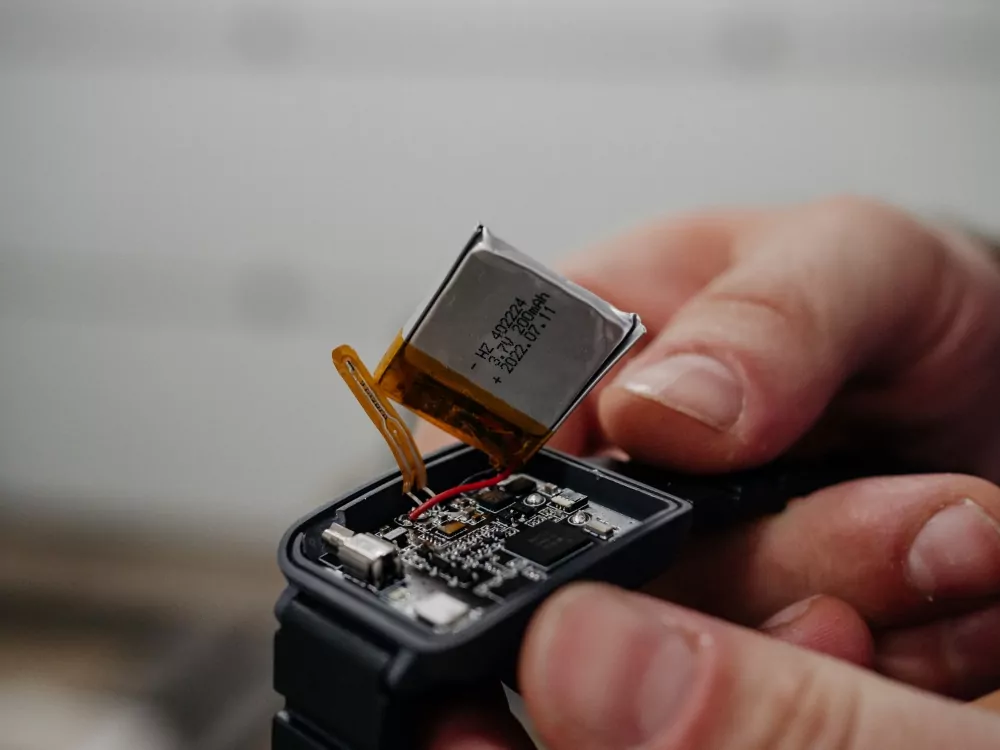
Still, real-world unpredictability is the final test. Changes in transmission frequency, environmental noise, or firmware bugs can disrupt even the best power budgets. Continuous field data collection and validation remain crucial.
Tackling Environmental and Deployment Constraints in Industrial IoT
Deploying IoT sensors in industrial environments offers a crash course in humility for any engineer. Most advice assumes a pristine lab, but reality means dust, vibration, and temperature extremes, all of which can upend energy calculations.
- For every device quietly logging data on a desk, there are thousands bolted to steel, buried in concrete, or exposed to wild weather.
- Environmental factors, especially heat and cold, directly affect battery life and safety. Lithium-ion batteries, for example, can degrade quickly if exposed to temperature extremes.
- Dust or condensation can corrode terminals and circuit connections, quietly shortening both battery and device life.
Industrial settings introduce another challenge: electromagnetic interference. IoT modules sharing space with heavy machinery may need to boost transmit power, rapidly depleting energy reserves. In hazardous locations, like remote oil rigs or chemical plants, durability and safety in power management are non-negotiable.
Battery Selection and Design for IoT Applications
Choosing the Right Power Source for IoT Devices
Selecting the right battery is part art, part science, and always demands careful planning. At the root of battery design lies one key trade-off: the balance between device size, battery life, and cost.
| Battery | Best Fit for IoT Devices | Why It’s Chosen |
| Lithium-ion (rechargeable) | Wearables, smart meters, handheld or serviceable devices | High energy density and rechargeability make it ideal when compact size matters and regular charging is possible. |
| Lithium coin cell | Small, low-power sensors, tags, and intermittent transmitters | Compact size and low self-discharge make it a practical choice for devices that sleep most of the time. |
| Lithium-thionyl chloride (Li-SOCl₂) | Remote agriculture, utility metering, environmental, and industrial sensors | Very high energy density and long life make it well suited for low-power devices in hard-to-access locations. |
| Energy harvesting + small storage | Solar outdoor sensors, vibration-powered monitors, and low-maintenance deployments | Extends service life and reduces battery replacement by capturing power from the surrounding environment. |
At AJProTech, our product teams iteratively test and adjust energy flow as deployments scale: there’s no substitute for ongoing, data-based optimization in keeping tomorrow’s connected devices running strong.
Power Management Systems in IoT
Integrating a Battery Management System for Smarter IoT Power
Integrating a battery management system (BMS) is like hiring a reliable butler for your power supply. Instead of asking if anything needs charging, you know the energy status at all times. BMS is vital for modern IoT, especially when using rechargeable batteries in tough conditions.
- The BMS tracks voltage, temperature, and current (since high current is rarely good news).
- It predicts remaining battery life, moving maintenance from guesswork to planning.
- Remote teams can evaluate each device’s health: if a specific node’s battery degrades faster, the BMS can send an alert before failure.
- Safety is improved: the BMS can disconnect a failing or unsafe cell, protecting nearby equipment and the device.
- Advanced BMSs balance charge between cells, log long-term stats, and allow firmware updates for ongoing power optimization.
For deployments where downtime means lost revenue or compliance issues, this approach is invaluable. And with AI and machine learning advancing, future BMS platforms will be able to predict and optimize device power even more deeply.