


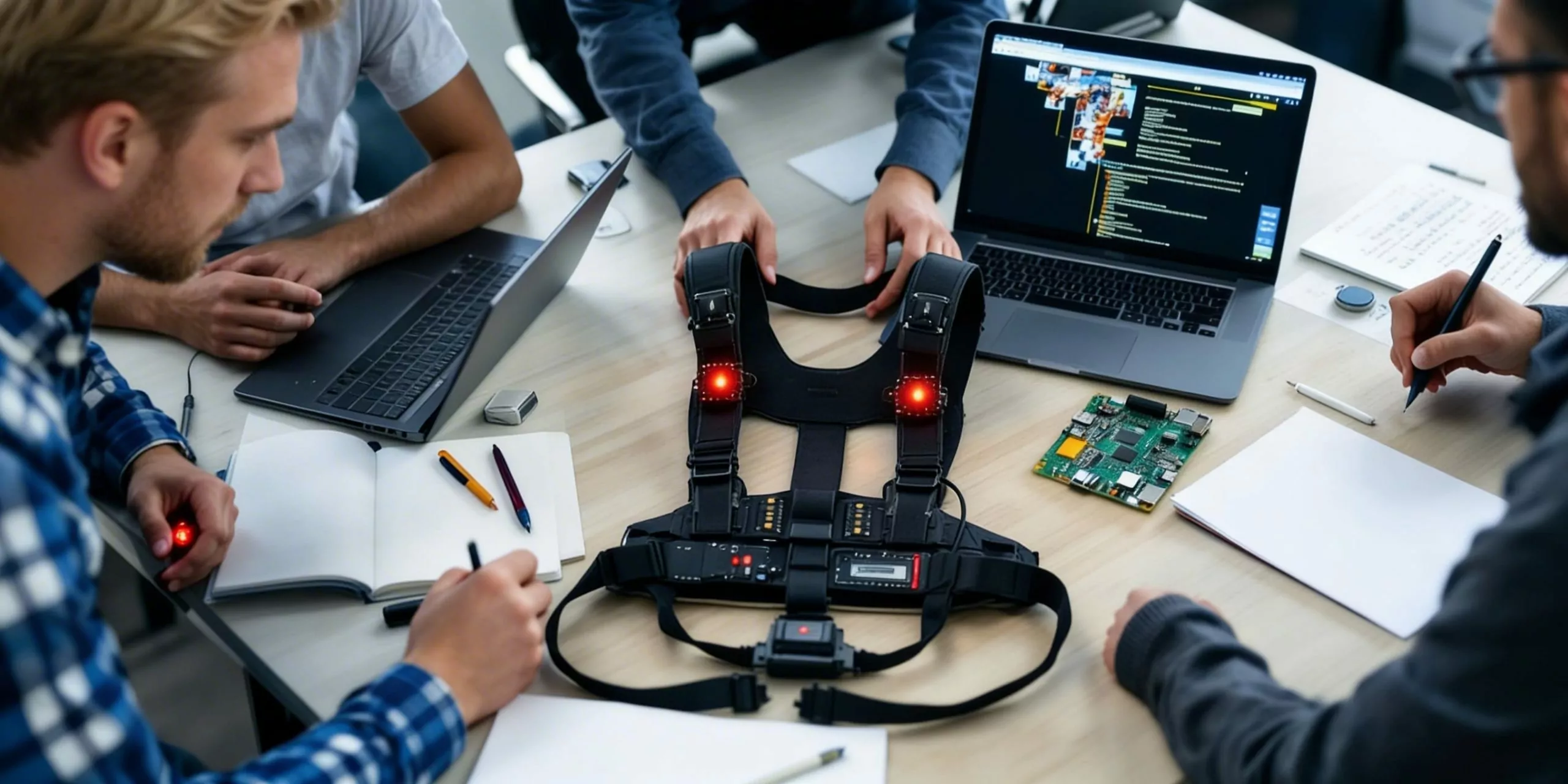
Building a game vest is about transforming the human body into a responsive, interactive interface. It’s a complex wearable hardware product where electronics, mechanics, firmware, and user experience must work together seamlessly. At AJProTech, we approach gaming vests as full-scale products designed for real users and real production.
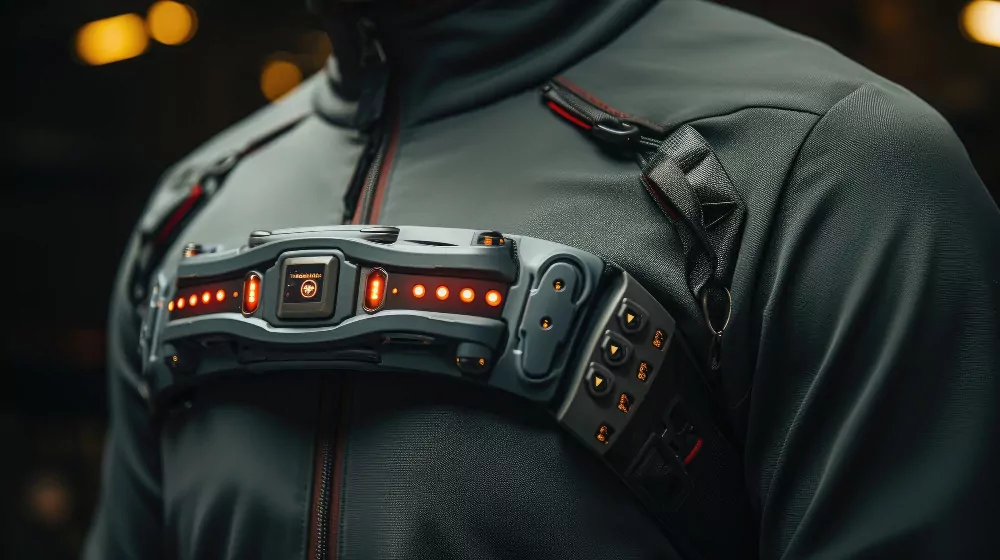
A modern gaming vest integrates haptic systems, embedded sensors, wireless communication, power management, and ergonomic industrial design. Every design decision affects comfort, latency, reliability, and long-term usability. Successful products start with a clear understanding of the intended use case -VR immersion, esports training, location-based entertainment, or fitness gaming – because each scenario defines different performance and architectural requirements.
Hardware development for gaming vests
From a hardware development perspective, game vests typically include haptic actuators such as ERM or LRA motors, motion and impact sensors, custom PCB design, and a wearable-grade battery system. AJProTech designs electronics optimized for low latency, thermal efficiency, and extended battery life, ensuring the vest performs consistently during long gameplay sessions.
Industrial and mechanical design
Mechanical and industrial design for wearables plays a critical role in user adoption. Weight distribution, flexibility, sweat resistance, and durability directly impact how the product feels during movement. Our team designs housings and soft-good integrations with manufacturing in mind, aligning early concepts with injection molding, textile production, and scalable assembly processes.
Firmware development for gaming vests
Firmware and system architecture define the responsiveness of the experience. Real-time haptic feedback requires precise synchronization with game engines such as Unity and Unreal. AJProTech engineers develop embedded firmware, communication protocols, and APIs that support smooth integration with gaming software and future feature expansion.
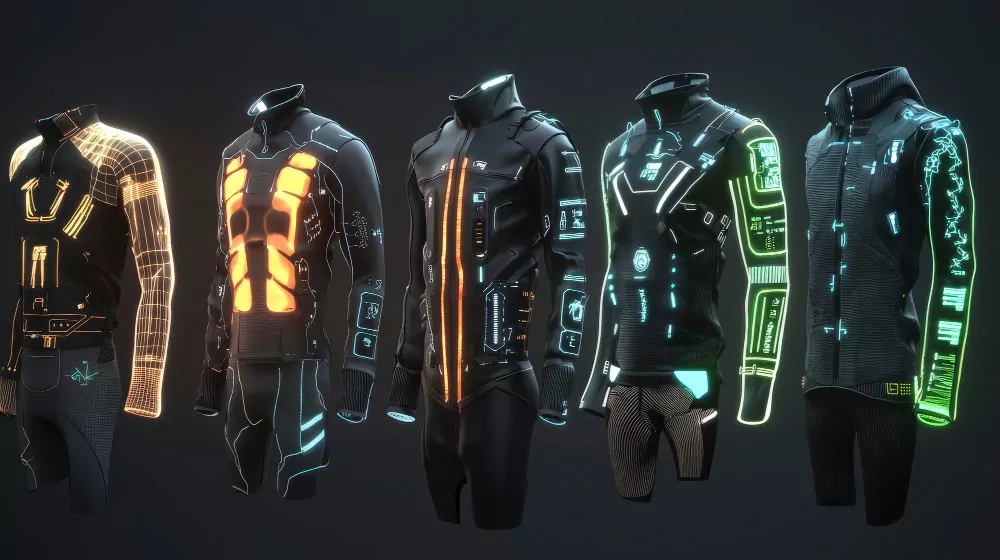
Design for manufacturing
As projects move toward launch, scalability becomes a core focus. Design for Manufacturing and Assembly (DFM/DFA), supplier validation, testing strategies, and compliance planning are integrated into the development roadmap. This approach allows startups to transition from prototype to pilot production with confidence.
For founders building a haptic gaming vest, VR wearable, or interactive gaming hardware, AJProTech provides end-to-end product development support. From early concept and prototyping to production-ready hardware, we help teams move faster while maintaining engineering rigor.
The next generation of gaming is physical, immersive, and wearable. Products that succeed are built on strong engineering foundations, thoughtful design, and a clear path to manufacturing.