



Show categories ↓
IoT Product Development

Got a hardware idea but no engineering team? Meet AJProTech, a 2026 Inc. Power Partner that takes products from first sketch to production.

Avoid costly tooling changes with tolerance stack-up analysis. AJProTech applies mechanical design and production-validation expertise to catch assembly risks before manufacturing.

AJProTech helps hardware teams build secure biometric devices with the right sensor architecture, liveness checks, template protection, firmware security, and production-ready validation.

Clutch Global Awards go to the top 15 companies worldwide in each category, chosen from verified client reviews rather than submitted portfolios.

Plan your hardware validation path with AJProTech: figure out validations, typical unit counts, timelines and certification at every stage
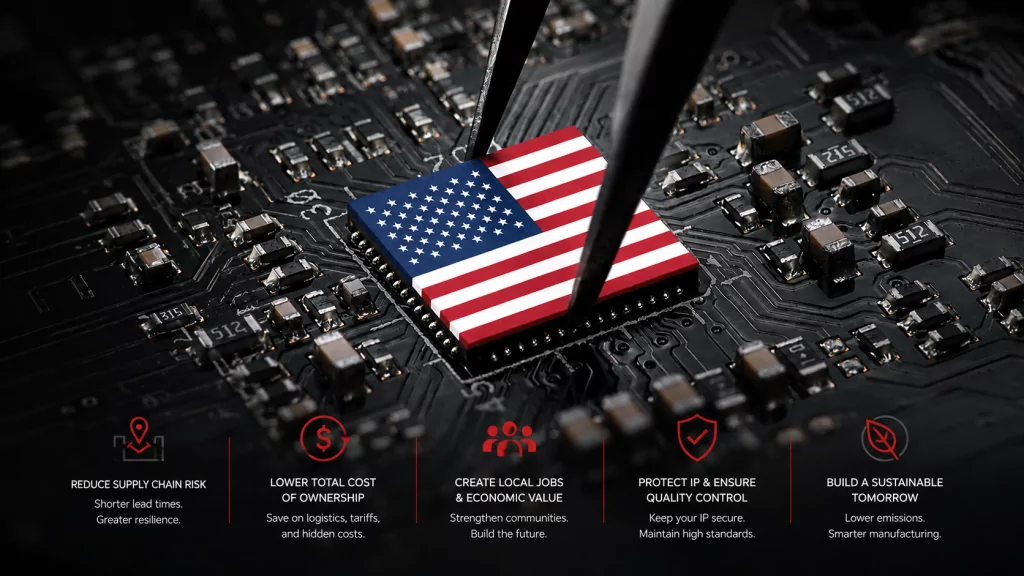
Compare reshoring costs, tariff risks, and production trade-offs with AJProTech’s hardware engineering experts before deciding where to manufacture your next electronics product.

Learn how to pass FCC certification, what costs and timelines founders should expect, and how AJProTech helps hardware teams prepare products for testing, compliance, and market entry.

The Section 232 semiconductor tariff is expanding. How hardware teams manage HTS classification, origin, and sourcing before Phase 2 locks in costs.

Learn how AJProTech uses small language models to help products run AI offline, reduce cloud costs and protect user data. Explore SLM vs. LLM trade-offs, edge deployment requirements and fine-tuning options with our AI experts.

Practical advice for hardware startups and product teams deciding where AI processing should happen, how to split the workload, and what that choice means for cost, speed, and user trust.

AI is reshaping hardware development by accelerating mechanical design validation and optimization. This article shows how engineering teams can reduce iteration cycles, improve reliability, and bring hardware products to market faster.

Discover how you can use deep learning to improve speech recognition accuracy, noise resistance, and real-time voice processing in voice-enabled devices.

A practical guide to Edge AI hardware covering processors, accelerators, market growth, performance tradeoffs, and deployment use cases.

Explore TinyML technology enabling AI on microcontrollers for wearables, sensors, and real-time edge computing without the cloud.

A complete guide to Hardware Security Modules: how they work, why they’re critical for key protection, and how to evaluate the right solution for your needs.
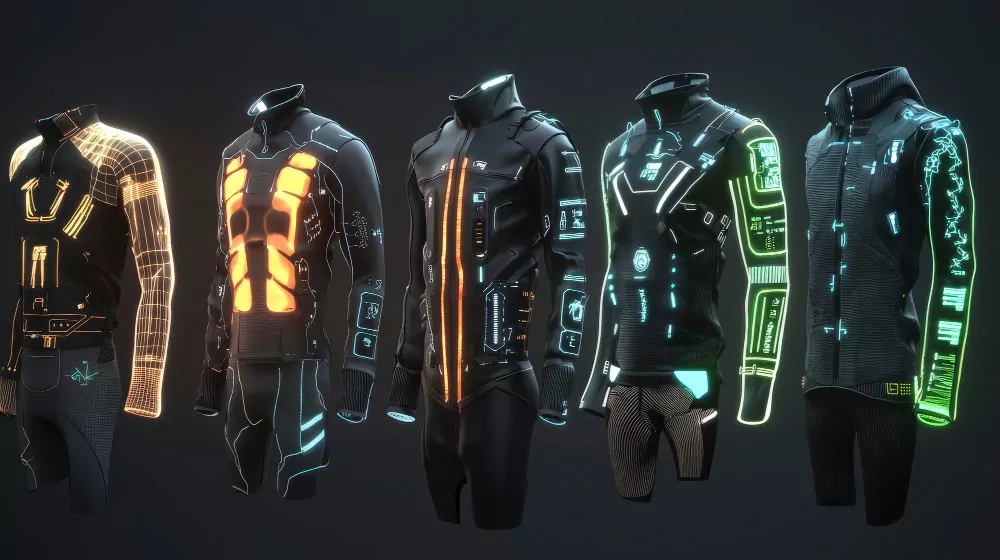
Explore advanced haptic systems for virtual reality, from actuator engineering and wearable design to full-body immersion and emerging feedback technologies.

Detailed overview of sensor integration for IoT products, including sensor selection, hardware integration techniques, data processing, and connectivity constraints.

This article explains how startups can develop a haptic gaming vest, from early concept and use-case definition to custom PCB design, firmware integration, and preparation for scalable manufacturing.

Learn why electromagnetic compatibility (EMC) testing is critical for electronic devices, from pre-compliance to certification. Explore global EMC standards, and how early EMC planning helps ensure faster market entry.

Learn the differences between NFC and RFID, including range, security, access control use cases, and real-world applications.

Discover how structured BOMs improve product lifecycle efficiency, reduce costs, prevent production errors, and support scalable, compliant manufacturing.
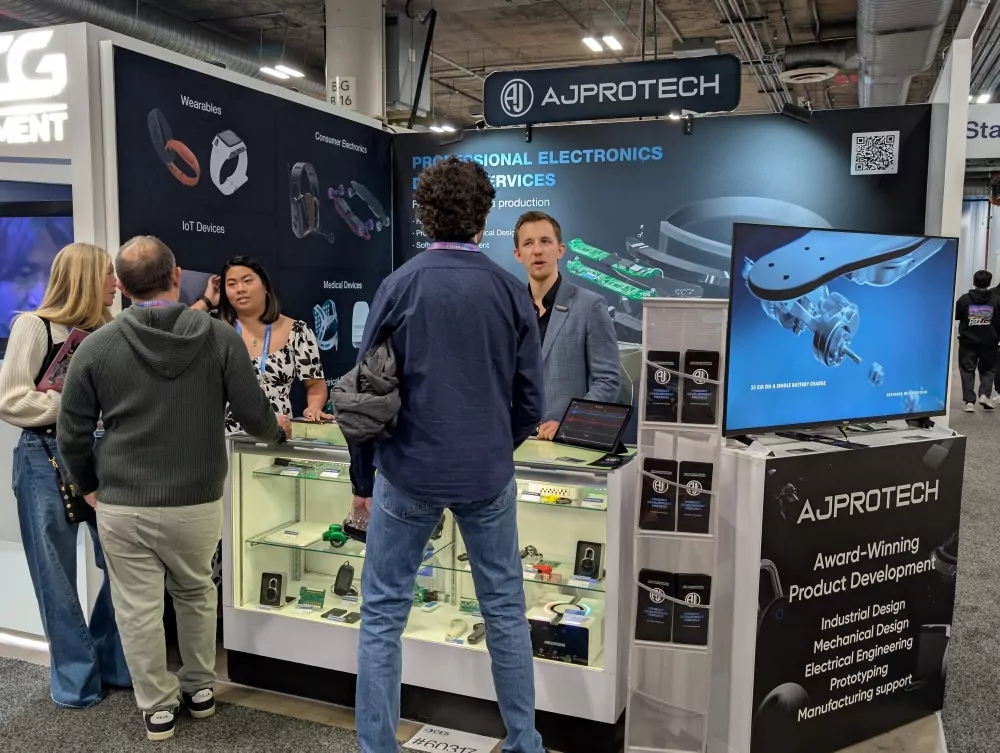
Our CMO, Maria Alexander, on CES 2026: why hardware is back, and why building it just got more complex.

Learn the key differences between firmware and software, why firmware updates matter, how versions impact device security, and how to develop reliable AI-ready firmware.

Discover innovations in AI Hardware as it refers to specialized devices powering Artificial Intelligence. Explore the latest hardware options for AI training, deployment, and more.