



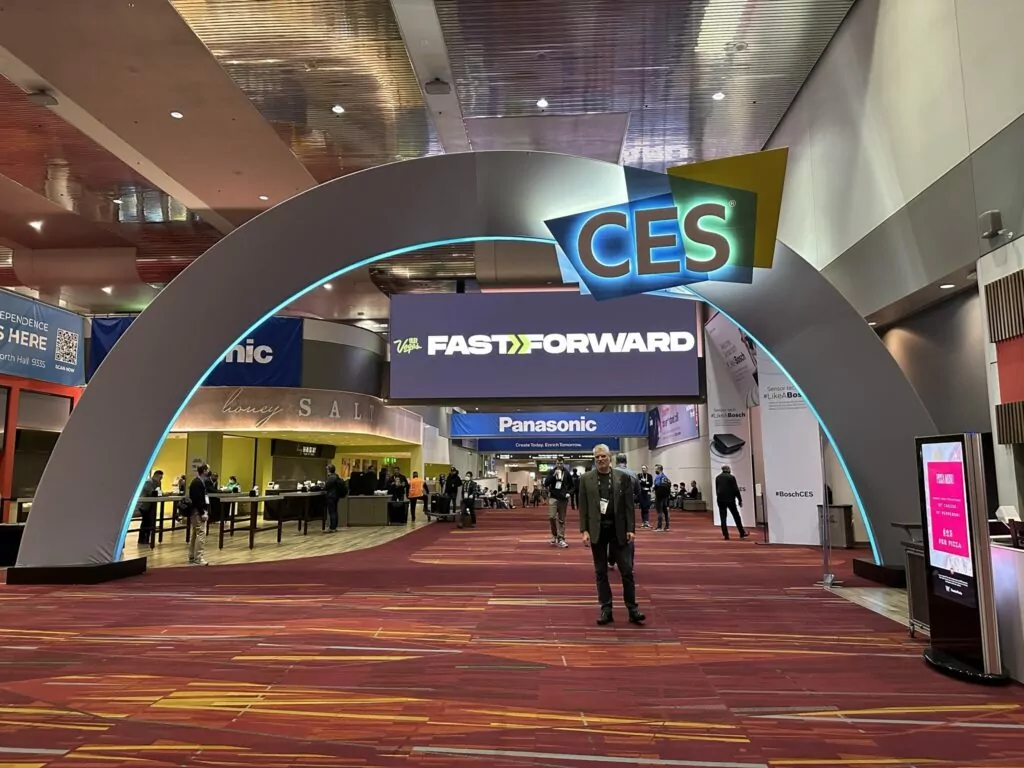
In early January, Las Vegas will once again host the Consumer Electronics Show, the largest annual gathering of companies shaping the next decade of technology. CES 2026 is expected to present a more measured vision of innovation, with less focus on spectacle and more emphasis on integration, responsibility, and practical intelligence.
Over the past few years, the event has mirrored the industry’s evolution. CES 2024 centered on embedding AI into every category of consumer electronics; CES 2025 focused on connecting devices into unified ecosystems. The 2026 edition is likely to take the next logical step and show how these systems can function coherently rather than independently.
The prevailing expectation is that new products will demonstrate maturity rather than novelty. Instead of devices designed to astonish, most exhibitors are likely to highlight solutions that merge artificial intelligence, robotics, and connectivity in ways that solve specific, everyday problems.
Key themes anticipated at CES 2026 include:
- The Internet of Smarter Things: Connected systems that adapt behavior through contextual awareness.
- Artificial Intelligence as Infrastructure: AI integrated invisibly across products and services.
- Advanced Wearables: Devices evolving from data collection to preventive health and behavioral insight.
- Purposeful Prototypes: Early-stage technologies developed with sustainability and manufacturability in mind.
Taken together, these areas point toward a single trend: the gradual normalization of artificial intelligence in everyday tools. The focus of CES 2026 will not be on new categories of technology, but on the refinement and interconnection of those that already exist.
The Internet of (Smarter) Things: From Connected to Cognitive
The Internet of Things has been a central theme at CES for more than a decade. In 2026, attention is expected to shift from simple connectivity toward what manufacturers describe as contextual intelligence: systems that interpret and act on information rather than merely transmitting it.
Earlier generations of IoT devices focused on collecting data: temperature, motion, location, and energy use. The next stage integrates edge computing and embedded AI, allowing devices to process information locally. This approach reduces latency, minimizes dependence on cloud infrastructure, and offers improved privacy, which is a growing concern for both consumers and regulators.
Security will remain a significant topic. The increased autonomy of devices introduces new vulnerabilities, and several exhibitors are expected to demonstrate hardware-level encryption and privacy-preserving architectures intended to protect user data at the edge.
Overall, IoT in 2026 appears to be entering a period of consolidation. Rather than showcasing isolated innovations, companies are likely to demonstrate how connected systems can cooperate efficiently, securely, and with minimal human input, signaling a shift from “smart devices” to intelligent environments.
AI As The Baseline For Innovation
Artificial intelligence is expected to dominate nearly every category at CES 2026, though not as a headline feature. The technology has become an underlying infrastructure embedded in chips, sensors, and systems that operate across homes, vehicles, and industrial networks. Exhibitors are likely to emphasize how AI enables context awareness, efficiency, and personalization rather than presenting it as a standalone innovation.
A major shift will be visible in the growth of edge AI, where computation occurs directly on the device. This reduces latency, minimizes reliance on cloud processing, and enhances data privacy. The approach is increasingly common in consumer electronics and enterprise systems alike, offering faster responses and greater control over sensitive information.
Key applications expected at CES include:
- Smart environments that adjust lighting, temperature, or sound based on user activity and preference.
- Healthcare and wearables that analyze biometric data in real time without transmitting it externally.
- Automotive systems that adapt driving assistance and safety features to individual behavior.
- Manufacturing equipment that uses predictive models to prevent mechanical failure.
At the same time, responsible AI will remain a central topic. With expanding adoption come concerns about data ownership, bias in algorithms, and sustainability in large-scale computation. Several exhibitors are expected to highlight transparency frameworks and low-power AI architectures as responses to these challenges.
The presence of AI across nearly all product categories suggests a period of normalization. Rather than introducing new forms of intelligence, CES 2026 will demonstrate how artificial intelligence is becoming a quiet but essential utility, shaping how devices perceive, decide, and interact with the world.
Wearable Tech 3.0: From Fitness to Preventive Health
Wearable technology is expected to occupy a prominent role at CES 2026, reflecting its ongoing evolution from fitness tracking toward preventive health and continuous diagnostics. The category is expanding beyond watches and bracelets to include medical-grade patches, smart textiles, and discreet devices integrated into everyday clothing and accessories.
The emphasis this year will be on data interpretation rather than data collection. Modern wearables are designed to translate physiological signals, such as heart rate variability, blood oxygen levels, and skin temperature, into actionable insights. With advances in miniaturized sensors and edge processing, these devices can now identify trends linked to stress, fatigue, or early signs of illness, often before noticeable symptoms appear.

Notable trends likely to be highlighted include:
- Medical wearables capable of continuous ECG or glucose monitoring under regulated clinical standards.
- Smart clothing and fabrics equipped with embedded sensors for athletic performance and rehabilitation.
- Industrial and safety wearables that monitor fatigue, heat exposure, and environmental hazards for workers.
- Hearables and smart jewelry offering discreet biometric monitoring and real-time feedback.
Overall, the wearable technology segment appears to be entering a phase of medical relevance and design restraint where success depends less on novelty and more on reliability, safety, and the ability to integrate seamlessly into daily life.
Designing for Empathy, Not Efficiency
One of the most interesting shifts on the CES 2026 floor will be about rethinking success. It’s no longer just about faster, thinner, or smarter, it’s about kinder.
A device can be powerful, but if it overwhelms, distracts, or alienates, it fails at its most basic job: serving the human using it.
That’s why we’re seeing a rise in what’s being called “calm technology.” These are devices that blend into the background, reducing digital noise rather than adding to it. Instead of constant pings and pop-ups, information surfaces only when truly relevant.
The best innovation in 2026 feels almost invisible, the kind that disappears behind its usefulness.
When AI, Robotics, and IoT Become One
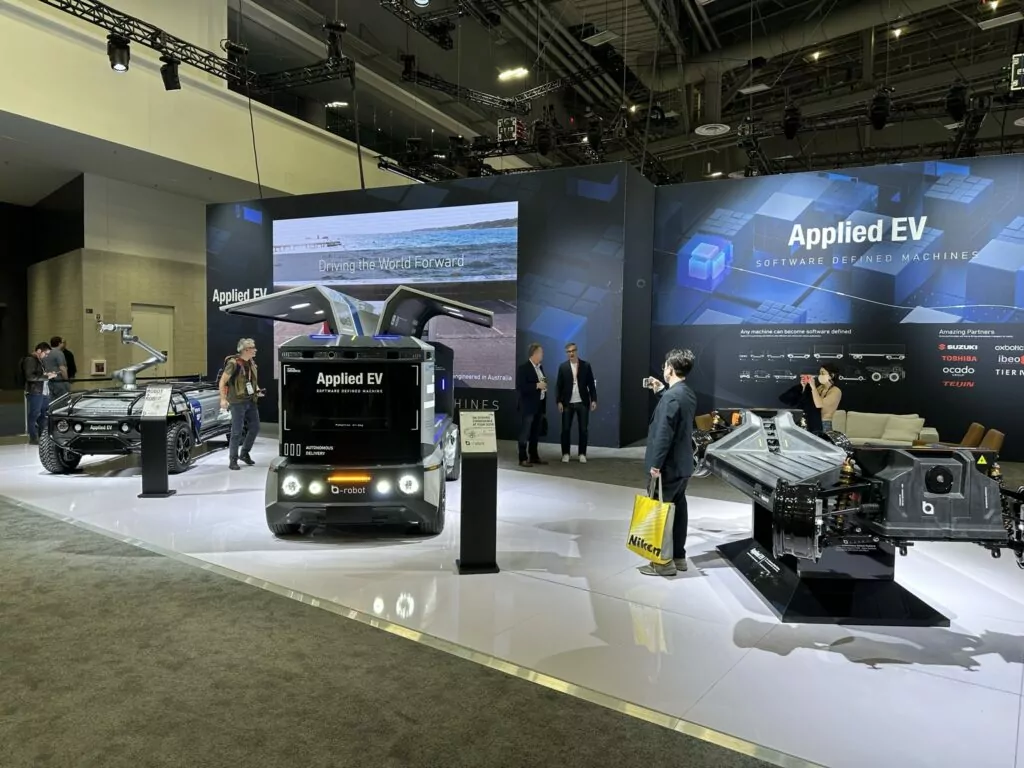
A central theme of CES 2026 will likely be the convergence of previously distinct technologies. Artificial intelligence, robotics, and the Internet of Things are no longer developing along separate paths; they are merging into unified, interdependent ecosystems. This trend reflects the industry’s recognition that intelligence, connectivity, and automation function most effectively when designed as a single system.
The shift is being enabled by several overlapping developments:
- Edge computing: Processing at the device level reduces latency and dependence on the cloud.
- Standardized communication protocols: Shared data formats and interoperability frameworks allow devices from different manufacturers to cooperate.
- Miniaturized, low-power hardware: Compact sensors and processors make distributed intelligence economically viable.
- AI-driven orchestration: Machine learning coordinates networks of machines, optimizing behavior without central supervision.
This integration will likely be visible across multiple domains. Factories are expected to show synchronized systems where robots, sensors, and analytics collaborate in real time. In healthcare, autonomous logistics units may interact with wearable diagnostics and hospital databases. Even domestic settings will demonstrate energy and resource management coordinated across appliances, vehicles, and smart grids.
The convergence of AI, robotics, and IoT suggests a shift from designing devices to designing ecosystems. CES 2026 will not only showcase individual innovations but also the frameworks connecting them, a signal that the next stage of digital progress will be systemic rather than product-based.From
Prototype to Market: Why Half of Products Never Ships
Each year, CES introduces thousands of prototypes that demonstrate technical potential rather than commercial readiness. Many will not reach production, not due to failure, but because the path from prototype to scalable product is inherently complex.
Key factors behind this gap include:
- Manufacturability: Designs suitable for demonstration often need reengineering for mass production.
- Cost and sourcing: Materials, suppliers, and assembly methods must align with realistic pricing.
- Certification: Safety and compliance standards for electronics and connected devices add time and cost.
- User testing: Early feedback frequently exposes flaws that require full redesigns.
As a result, the large number of concepts that never ship serves an essential purpose. CES remains an experimental environment where ideas are tested against real-world constraints. The event continues to show that true innovation is measured not by invention alone, but by the ability to manufacture it reliably and at scale.
The Engineering Validation Test (EVT), Design Validation Test (DVT), and Production Validation Test (PVT) are the invisible milestones between concept and market. Passing each stage is like crossing a desert of details: material compatibility, firmware stability, assembly yield, and regulatory certification.
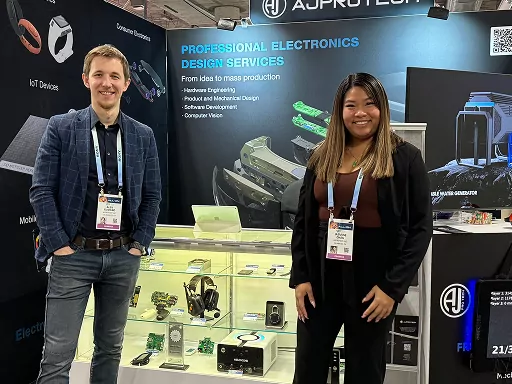
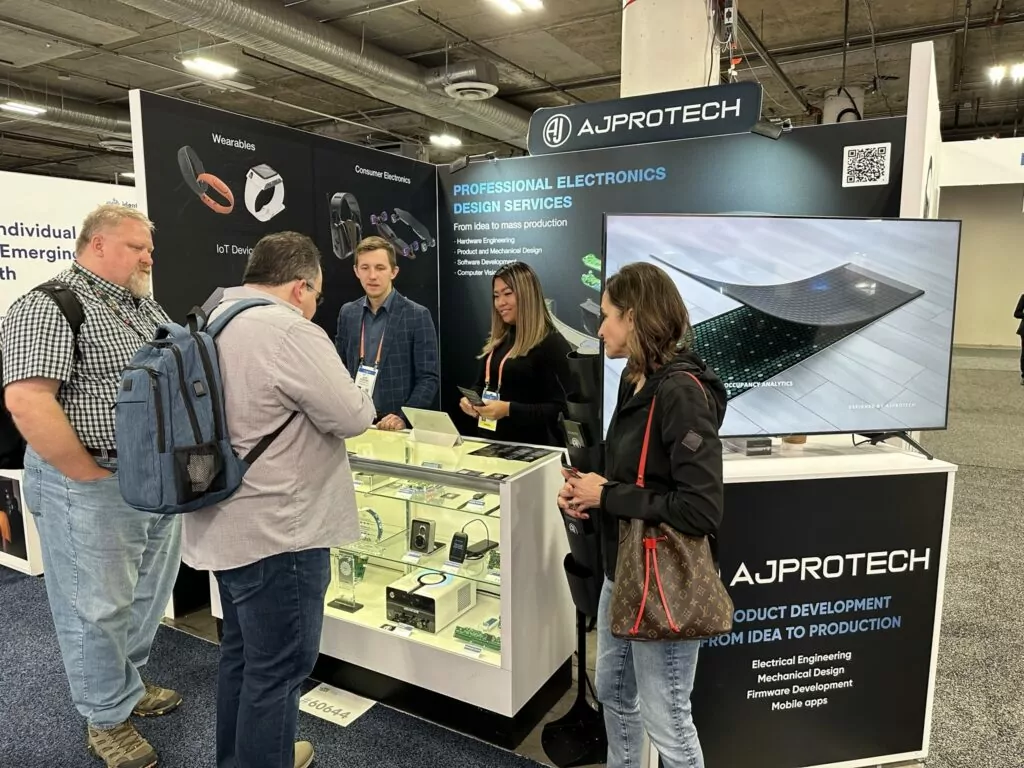
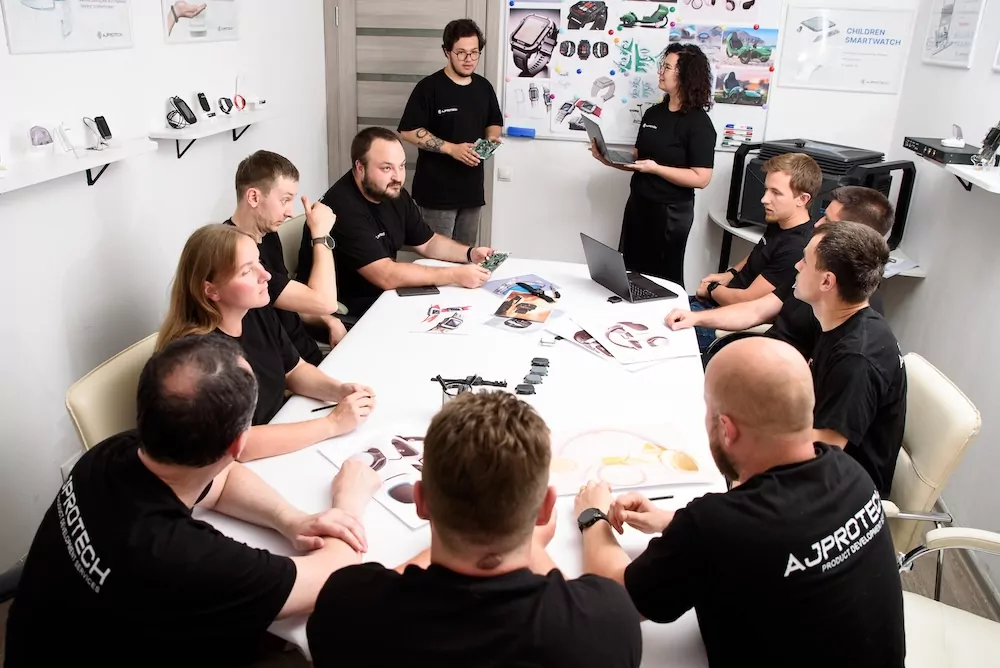
At AJProTech, we’ve seen how the right technical validation can make or break a product’s journey. A successful launch isn’t about building something flashy, it’s about building something repeatable.
As CES 2026 approaches, the focus of consumer technology is shifting from invention to integration. Artificial intelligence, robotics, and IoT are converging into coordinated systems that emphasize interoperability, reliability, and sustainability.
The industry’s direction suggests that success will depend less on producing standalone innovations and more on developing technologies that operate collaboratively to enhance everyday life while remaining efficient, secure, and largely invisible.