


Practical Gains in Image Recognition with Modern Edge Hardware
Edge AI now lets machines see, think, and act where the data is created: right at the device. The days when all image recognition depended on sending data across the globe to remote servers are fading.
Chips like NVIDIA Jetson handle artificial intelligence tasks inside smart cameras or robots, delivering real-time results. For commercial or industrial products, this change isn’t just cosmetic, it addresses major bottlenecks:
- Less latency: No need to wait for cloud round trips.
- Improved data privacy: Images remain on the device.
- Real-world responsiveness: Devices can “see” and “decide” on the factory floor or at a busy intersection with no lag.
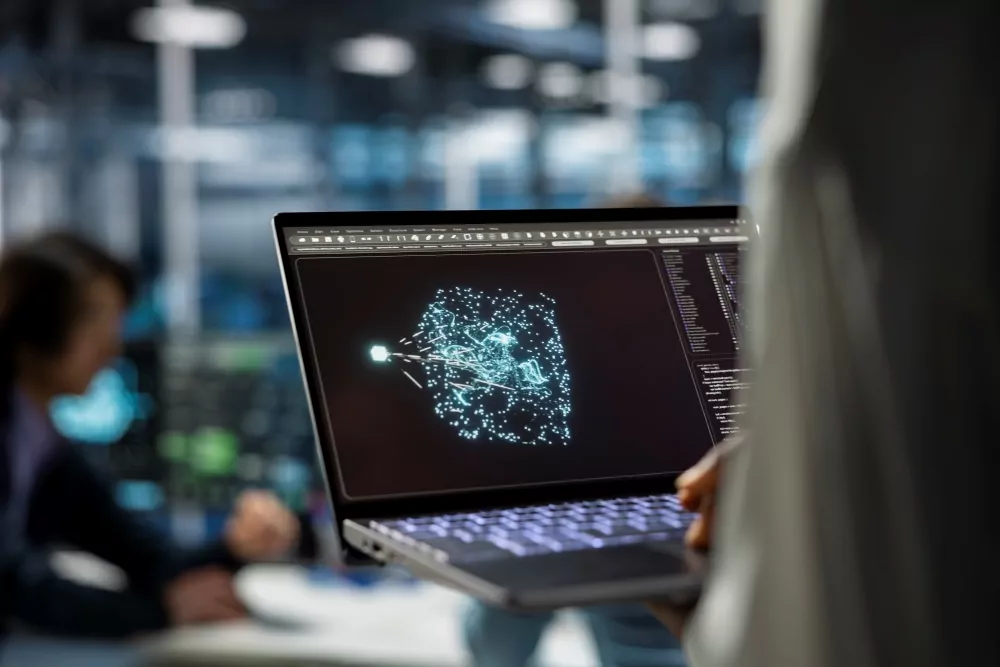
With hardware-based image recognition, devices can detect danger, identify useful items, and automate responses with a speed and accuracy that seemed futuristic just a few years ago.
Startup-Friendly Applications: What’s Feasible and What’s Next?
Advances in Jetson hardware empower startups. Teams can now create and test products at a fraction of traditional costs. Sample use cases include:
- Retail: Automated shelf monitoring flags out-of-stock or misplaced items in real time.
- Logistics: Robots use Jetson-powered recognition to map spaces, avoid obstacles, and pick inventory effectively.
- Augmented reality: Wearables overlay information live, with no privacy trade-off from sending data to the cloud.
- Healthcare and consumer electronics: On-device AI helps startups navigate strict privacy laws for medical or personal data.
The open-source Jetson community offers guides, code samples, and forums for troubleshooting, making it easier for early teams to get started. For more on how startups use this technology in Internet of Things devices, see IoT products built by us at AJProTech.
Machine Learning vs. Traditional Machine Learning in Image Recognition
Before deep neural networks, traditional machine learning was the go-to for image recognition. Engineers would extract features like edges, colors, textures, and shapes, packing them into feature vectors.
- These vectors converted high-res images into lists of numbers, highlighting only the most essential details.
- Algorithms such as Support Vector Machines (SVMs) or Random Forests used these vectors to classify images, whether it was a cat, a dog, or something less ordinary.

This approach required hours of image labeling, careful preprocessing (normalization, denoising, resizing), and worked best with simple, predictable images. Changing lighting, odd angles, or anything outside the norm often led to mistakes.
Still, this method was a foundation for early automation and security cameras, especially in contexts where every pixel had a clear meaning: barcode reading, product sorting, etc. Today, these models persist in some modern roles where speed and low power are needed, but their limitations are clear for real-time or complex scenes.
Modern Deep Learning Advances: From AI Image to Real-Time Insights
Today, deep learning dominates image recognition discussions. Convolutional Neural Networks (CNNs) don’t need manual feature picking, they learn from large datasets and can identify minute patterns, even in messy or cluttered images.
- Embedded platforms like NVIDIA Jetson Nano and Orin AGX now run CNNs directly on-device, bypassing the lag of cloud processing.
- Recent NVIDIA Jetson updates let even entry-level models like Jetson Nano deliver real-time recognition in everyday products: retail kiosks, security cameras, wearable devices, and more.
- Models such as YOLOv7-tiny, SSD-lite, and RetinaFace process video streams quickly, while TensorRT optimization and quantization enable them to fit tight energy and thermal constraints.
For startups, this leap means:
- Faster prototyping and market entry, even for small teams.
- Reliable performance in dynamic real-world settings.
- Flexible model designs: lightweight ML for screening, deep learning for complex analysis.
Of course, challenges remain: balancing model size and power, keeping performance high in poor conditions, and making best use of community support. For teams wanting a head start, AJProTech’s computer vision expertise offers resources and guidance for deploying the newest AI image models in hardware.
| Aspect | Traditional Machine Learning | Deep Learning |
| Feature Extraction | Manual (engineered features) | Automatic (learned by CNNs) |
| Data Needs | Smaller datasets | Large datasets required |
| Accuracy (Real-World) | Struggles with variation | Highly accurate in complex scenes |
| Hardware | Low power, CPU-friendly | GPU / edge AI (e.g., NVIDIA Jetson Nano) |
| Real-Time Performance | Limited for complex tasks | Strong with optimization |
| Use Cases | Simple, controlled environments | Dynamic, real-world applications |
NVIDIA Jetson for AI Image Recognition: Face, Object Detection, and More
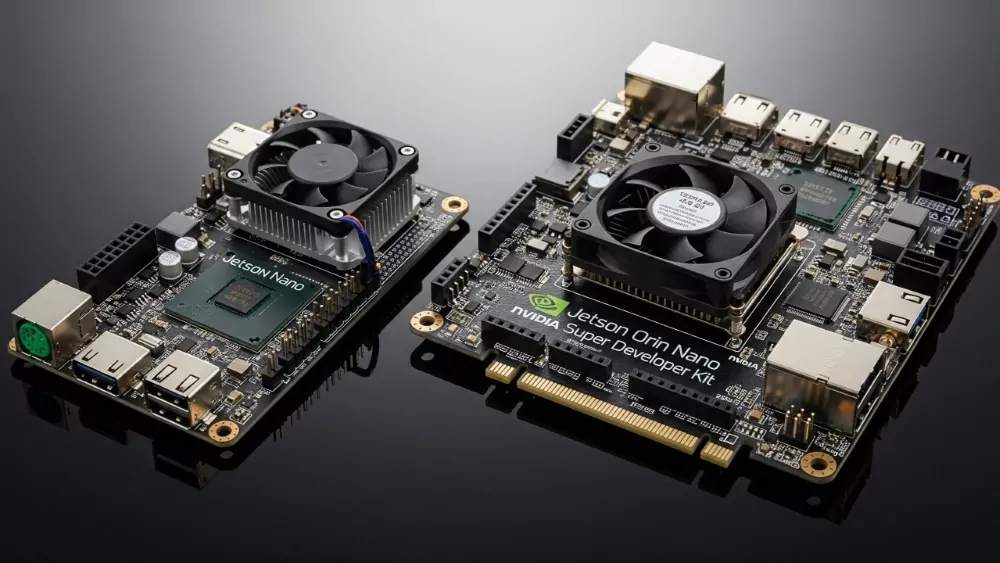
NVIDIA Jetson Nano has sparked a new era of on-device AI image recognition. No longer tied to cloud servers, Jetson Nano enables real-time computer vision directly at the edge. The board’s GPU runs deep learning models capable of recognizing and detecting objects instantly, even on affordable hardware.
NVIDIA’s latest hardware allows developers to get optimizations that squeeze more from every watt. Startups can now deploy live video analysis at practical frame rates, tracking multiple objects at over 20 FPS. This unlocks:
- Traffic monitoring
- Inventory inspection
- Smart home security
Jetson Nano makes AI accessible to projects and teams previously limited by costs. For examples of cutting-edge AI hardware solutions in action, see these AJProTech case studies.
Face Recognition and AI Image Model Performance on Jetson Platforms
Face recognition on NVIDIA Jetson platforms is seeing major advances. Integration with frameworks like OpenCV, PyTorch, and TensorFlow allows deep learning models to run on-device: no internet connection required for live face detection.
- Jetson Nano enables several matches per second with local processing. For more demanding cases, Jetson Orin Nano supports up to 40 inferences per second, with modern AI models trained for tough lighting or occlusion scenarios.
- Latest JetPack SDK updates provide tools for memory and speed optimization, so real-time detection fits in compact hardware. Model performance remains solid indoors and outdoors.
While low-light and occlusion remain challenges, training with a diverse dataset and smart augmentation helps keep recognition rates high. Jetson’s modular design and regular software updates let teams build reliable edge AI solutions, which is key for security and analytics in industries with strict privacy needs.If you are building a hardware product with AI image recognition, the right engineering partner can help you move from idea to reliable, production-ready device faster. AJProTech’s hardware development capabilities support the full production cycle — from product design and mechanical and electrical engineering to rapid prototyping, edge AI integration, and manufacturing support.