


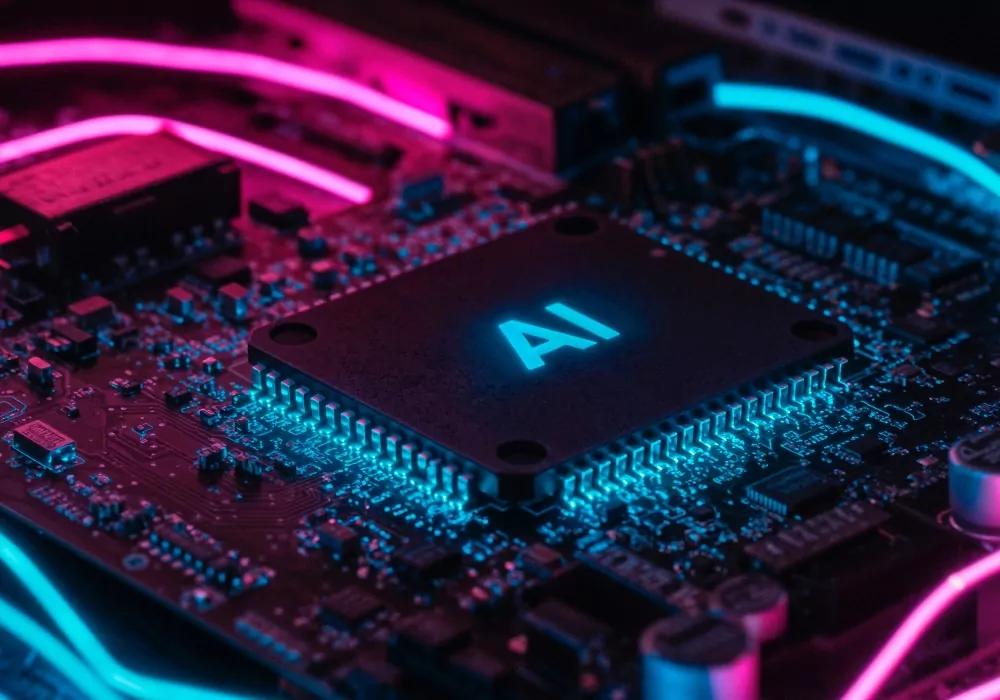
Key Components of AI Hardware
Ten years ago, if a device did something “smart,” the magic was mostly software and a good CPU. Today, AI hardware takes center stage, and not just in research labs. From consumer gadgets to industrial tools, custom silicon is now designed for specific artificial intelligence workloads. It’s a bit like moving from a Swiss Army knife to a power drill: both work, but one finishes the job much faster and with less effort.
Traditional CPUs, once the main muscle of computing, now strain to process sprawling neural networks and deep learning models. This paved the way for GPUs, tensor cores, neural processing units (NPUs), and custom-built AI hardware from leaders like Nvidia and AMD. Each brings its specialty to the table:

- GPUs: Excellent for parallel computing tasks.
- NPUs: Deliver high performance per watt for mobile AI.
- ASICs (custom chips): Function like race cars built for one purpose.
Bandwidth, memory, and power management are crucial because fast processors need rapid access to data. Even budget smartphones now include neural engines that run tasks like face unlock or real-time photo edits. At the edge (video cameras, industrial robots, connected cars), local AI processing reduces latency, increases privacy, and ensures decisions are made in an instant (often under 20 milliseconds). For more details on how AI hardware enables next-gen IoT and wearable innovation, see examples here.
Architecture for AI Workloads
If AI components are the muscles, the architecture is the choreography. It decides who does the heavy lifting and who stays on the sidelines. Next-gen devices need more than brute force, they need balance in handling mixed AI workloads. Heterogeneous architectures combine CPUs, GPUs, NPUs, and custom accelerators on a single SoC (system on chip), allowing each to focus on its strengths.
In a modern smartphone, for instance:
- The CPU manages daily tasks
- The GPU renders graphics and video
- The neural engine tackles tasks like image segmentation, real-time voice translation, and battery optimization
Manufacturers face a trade-off: a single-chip solution is sleeker, but can run hot under pressure. Splitting functions across several chips boosts efficiency and product life but complicates design and, sometimes, the price.
Advanced AI workloads (real-time AR, on-device deep learning, always-on voice recognition) push architecture even further. Engineers respond by building multiple data paths, using local memory caches to lower latency, and selecting low-precision arithmetic for energy savings.

Now, the main performance bottleneck shifts between compute power, bandwidth, and thermal management. Next-gen AI hardware often sports clever cooling (a mix of vapor chambers, advanced stacking, and sometimes even liquid cooling for desktops) all to keep performance steady when the device is working hard. The blend of flexible and specialized architectures keeps opening new doors for AI, in both industry and daily life.
Main Types of AI Hardware
AI Hardware Solutions for Efficiency
AI hardware is at the heart of next-generation devices, driving efficiency and changing how artificial intelligence works in practice. Picture your smartphone running facial recognition: if it used only a CPU, performance would crawl as the chip tackles calculations meant for parallel execution. Modern AI hardware, like GPUs and neural processing units (NPUs), offers wide parallelism, meaning thousands of tasks run together. This boosts speed and lowers energy use. Now, devices offer AI features like real-time translation, health monitoring, always-on voice commands without overheating or draining batteries.
Companies optimize architecture for both performance and smart energy savings. Features like dynamic voltage scaling and task-specific accelerators help deep learning and neural networks run with far less power than in the past. New designs go even further:
- Wearables and AR glasses rely on low-latency local compute
- Onboard memory and compact accelerators ease bandwidth loads
- Critical tasks run without sending data to the cloud, boosting privacy
Comparing Architectures in AI Hardware
Choosing the right AI hardware architecture is like picking the right tool for a complex job as there is no single right answer.
For an autonomous vehicle processing sensor data in real time:
- GPUs offer parallel compute for deep learning, quickly analyzing video feeds for object detection.
- NPUs are chosen for rapid AI inference and energy efficiency.
- TPUs specialize in tensor algebra, ideal for custom deep learning tasks.
This “heterogeneous architecture” brings CPUs, GPUs, NPUs, and even custom ASICs into one device, each excelling at certain jobs. CPUs manage the basics like user interface, system logic, and networking while the AI accelerators handle data-heavy tasks.
The challenge is managing the balance:
- GPUs dominate in data centers, but mobile devices depend on NPUs or ASICs for energy savings.
- New models and unexpected tasks can stretch even the most flexible hardware.
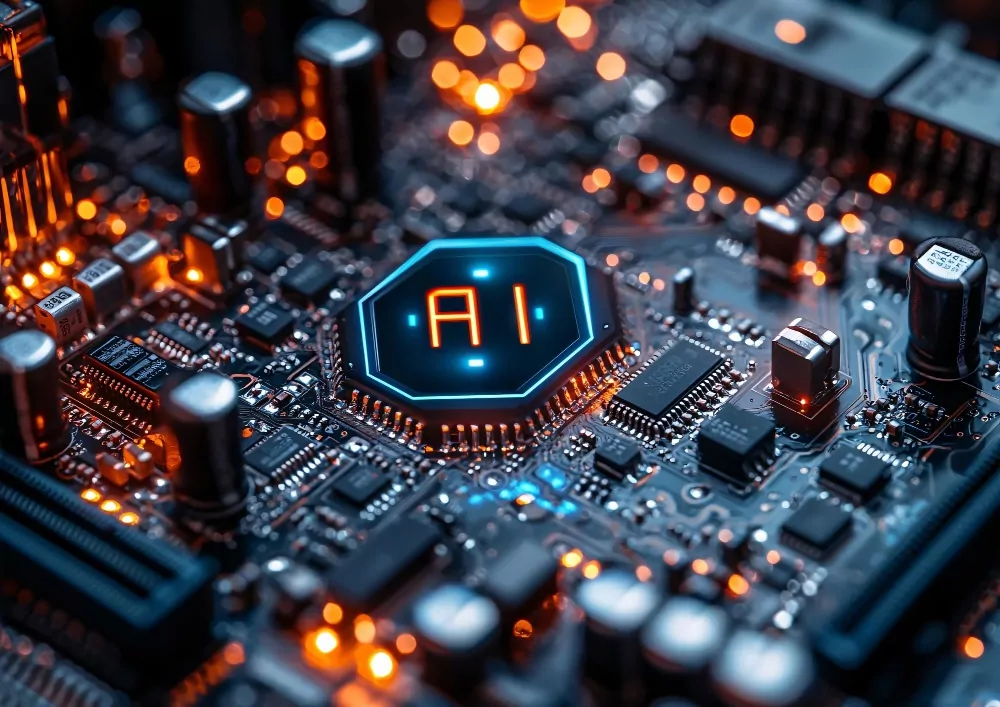
Sometimes, manufacturers upgrade the hardware or release firmware updates for new AI algorithms. Memory bandwidth and connectivity are crucial: high-speed memory (HBM) helps remove bottlenecks so neural networks run at full speed.
At AJProTech, we’ve seen just how complex these decisions become. Teams reference hardware development best practices to design today’s systems and prepare for tomorrow’s technology. Those who can compare, combine, and adapt architectures will make the most out of every compute cycle.
Benefits of AI Hardware in Next-Gen Devices
Today, next-gen devices would fall behind without modern AI hardware. The main advantage is speed without losing efficiency. Modern artificial intelligence tasks, like translating speech or recognizing faces, process huge amounts of data. Regular CPUs can’t keep up. This is where GPUs and neural accelerators shine, splitting algorithms into thousands of tasks and working in harmony like an orchestra outplaying a soloist.
The impact for users: phones unlock nearly instantly, photos sharpen in real-time, and even refrigerators can keep track of groceries fast and accurately.
Efficiency is now just as important. Devices crave more power, but with lower energy use. Dedicated AI processors with tensor cores, for example, run deep learning with much less energy than general chips. This boosts battery life for wearables and phones and helps meet sustainability targets. Less power means less heat, freeing up internal space for slimmer designs or more sensors.
AI hardware also enables new features. Specialized NPUs and GPUs make it possible for voice assistants to run locally (fast and private), let medical devices analyze health data in real-time, and allow video calls to use AI for sharper, noise-free images, even when your cat makes a surprise appearance. For developers, this rapid evolution means more flexibility and variety in design.
Reliability and accuracy have improved too. When devices need to tell a cough from a sneeze or sort accidental from real taps, precision matters. Dedicated AI hardware is designed for careful, consistent calculations. That reduces errors and supports powerful algorithms, letting devices run reliably at the edge, without depending on cloud servers.
Lastly, AI hardware helps reduce the total cost of ownership. Efficient chips lead to lower power bills and longer product lives. Modern processors designed for AI use less energy per task and let engineers upgrade performance without rebuilding whole systems: a win for budgets and the planet.
How Components of AI Boost Performance
Next-generation AI hardware is a fine-tuned team with each part designed to ramp up performance beyond what regular chips can manage.
Modern devices often combine:
- CPUs: Great for logic and system management
- GPUs: Excel at parallel tasks like image processing
- NPUs: Handle deep learning at low power
This division of labor means faster results and smoother user experiences, like real-time speech translation or stable videos even when you are on the move.
Bandwidth and memory are vital. High-bandwidth memory (HBM) boosts data flow for busy GPUs and NPUs. If bandwidth is slow, even the best processors must wait, holding back AI performance. Advances here let tasks like photo enhancement and real-time edge analysis happen almost instantly.
Modern AI architecture also brings adaptability. FPGAs and modular accelerators let hardware adapt for fresh neural models or algorithms. No need to design new chips each time: manufacturers can reconfigure hardware as needed, getting new features to market quicker and meeting user demand.
The results extend beyond consumer tech. Industrial IoT devices adopt AI chips to process sensor data locally, cutting latency and costs tied to cloud connections. Companies exploring these solutions benefit from a feasibility study to pick the right mix of processing, bandwidth, and energy savings. Choosing the right setup is key to staying ahead as new AI workloads emerge.