



Let’s set the scene: it’s the middle of the night, you’re half-asleep, and your living room stands between you and a cold glass of water. “Lights on,” you whisper, and like magic, the room glows. But the real force behind this modern convenience isn’t magic, it’s the result of integrating AI-powered voice assistants into devices.
In business, this shift means smoother user journeys and happier customers: no more squinting at tiny buttons or scrolling through endless menus. Giants like Google Assistant and Alexa have set the standard, priming users to expect effortless interaction, but there’s a universe of opportunity far beyond household helpers.

Voice AI is now making an impact in healthcare, fitness, finance, and education: if it has a plug or battery, someone’s adding a voice assistant. For companies building anything from consumer gadgets to industrial tools, integrating these capabilities is no longer a futuristic bonus, it’s the new baseline. User expectations have changed, shaped by smart speakers and clever chatbots.
Benefits of Adding Voice AI to Products
What’s in it for your users if you add voice AI to your product? The benefits start with simplicity: voice assistants reduce complexity, letting users ask, command, search, and receive answers faster than with manual controls. Picture a customer who can reorder supplies, schedule appointments, or check an order status without having to dry their hands first.
For organizations, this leads to higher efficiency. AI-powered voice features can handle repetitive requests, freeing up people to focus on higher-value work. We’ve seen that when voice is built in, customer satisfaction climbs, operational costs drop, and products feel modern and fun.
Products with voice AI also become more accessible. Spoken commands help anyone facing visual impairments, reduced mobility, or even a bit of tech shyness. This is not just a checkmark for inclusivity, it can open up whole new markets.
- Voice AI products collect valuable natural language data, delivering insight into customer needs, issues, and opportunities.
- Modern voice solutions enhance security and privacy, encrypting conversations and enabling sensitive commands to stay on the device.
- Voice features can build loyalty. When a product “gets” what the user says, no matter their accent or the background noise, it creates a connection.
With the right APIs and design, voice can work across hardware, mobile, wearables, and cloud services. That flexibility is the key to future growth and makes your product as easy to use as conversation. If you’re unsure how to start, we at AJProTech offer IoT product development resources to help plan your integration.
Core Components of Voice AI Technology
Text-to-Speech and Automatic Speech Recognition
When you add a voice assistant to any product, two critical building blocks stand out: text-to-speech (TTS) and automatic speech recognition (ASR). Without these, a voice system is like a phone with no ringtone.
- ASR turns spoken language into digital text. You say, “Turn on the lights,” and the device converts it into text for processing. The challenge is real-world usage: accents, background noise, mumbling, and slang all test the system.
- ASR models get smarter by being trained on various voices, speech patterns, and even interruptions like the family dog barking mid-command.
- Most teams use APIs from global providers, such as Google Assistant or Alexa, which offer strong natural language processing and multi-language support. Others might pick open-source options for increased privacy or customization.
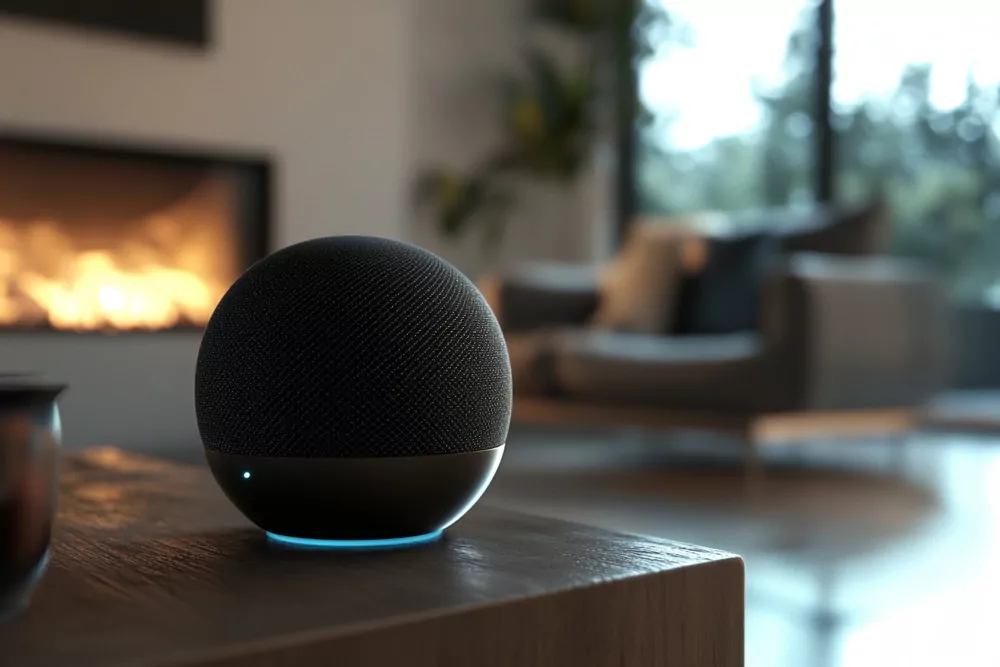
Once speech is converted to text and understood, TTS comes into play: it transforms text responses into spoken words, delivered in a synthetic (but increasingly lifelike) voice. TTS is like your tireless customer service agent, always ready to respond. Today’s TTS can sound so natural, users may not notice they’re talking to a circuit board.
Your approach, whether using a plug-and-play solution or building a custom voice model, affects your product’s time-to-market, privacy, adaptability, and even its personality. Voice AI technology is also what enables multilingual functionality, opening up your product to users across the globe.
Agentic AI and Voice AI Agents
While TTS and ASR are the muscle and nerves, agentic AI is the brainpower of your voice system. Going beyond simple commands, a true voice AI agent transforms your product into a partner, able to help with requests, solve problems, and improve through learning.
Agentic AI acts like a digital concierge:
- Rather than following a script, it infers intent, manages context over time, and adapts behaviors.
- Modern agentic AI uses large language models, so your assistant can answer questions, troubleshoot, and keep up in conversations.
Integration strategy is important. Off-the-shelf assistants like Alexa or Google Assistant bring fast, robust features but may limit branding or data access. A custom AI assistant built with specialized APIs gives you more control over dialogue, handling logic, and personality, tailored for your users.
Decide where your voice AI agent processes data:
- Cloud solutions offer rich features that evolve with AI advancements.
- Local or hybrid setups allow more control, privacy, and faster responses, especially valuable where security or low latency is critical.
A solid voice AI bridges the gap between casual user questions and your business systems, making your hardware or app the “face” of your services. Your agent can schedule appointments, check stock, and pull up custom recommendations.

When you combine ASR, TTS, and agentic AI, you get a powerful trio at the core of any great voice-enabled product. Integrated with empathy and a dash of humor, these tools create not just a smart product, but a truly delightful user experience. For more on pairing agentic AI with custom hardware, our hardware development guide shares practical insights.
How to Integrate Voice Assistant with AI: Platforms and Methods
Scaling your AI assistant beyond a single device is key. Users now expect their voice assistant to remember a breakfast order made on their phone, process the payment on a smart speaker, and confirm it on their car dashboard. This omnichannel reality means you need a unified backend to manage identity, sessions, and data across channels.
Some practical advice:
- Design your backend with APIs accessible to all endpoints.
- Use REST APIs or streaming protocols for quick responses.
- Build on stateless, event-driven architecture to avoid sticky sessions.
- Cloud-based platforms help you scale on demand, protecting you from late-night maintenance nightmares.
Consistency matters. Train your AI models to understand various accents, noise conditions, and languages. Automation in testing is crucial: use real-world devices in quality checks. Third-party services can help process speech on lower-end hardware.
At AJProTech, we’ve created scalable pipelines able to handle spikes in voice queries without server meltdowns. For a deeper dive into scalable deployment and device connectivity, take a look at our hardware engineering services page.
Integrating Voice AI with Existing IVR Systems
Updating legacy interactive voice response (IVR) systems is like renovating an old house: keep the charm, ditch the drafts. Voice AI changes the game, letting users speak in full sentences and get faster support.
- Map out your IVR flow: see which prompts get traffic and where callers hang up.
- Select a voice AI platform that works with your phone system (Google Assistant, Alexa, or API-driven solutions).
- Set up the AI to handle calls, apply ASR, and route based on detected intent, often with minimal changes to core systems.
- Test in phases: start with internal users, gather analytics, and fine-tune the model.

Plan carefully for error handling: real-world callers will say unexpected things and pause in strange places. Security is vital: encrypt customer voice data and run regular audits. With an incremental approach, businesses can turn even old-school call centers into AI-powered, voice-first hubs.
Privacy, Security, and Making Voice AI Scalable
Let’s talk about the elephant in the server room: privacy and security in voice AI. Nobody wants to feel their conversations may be kept for “future product improvement.” Users expect their requests and data to remain private.
- We at AJProTech always start with encryption: end-to-end protocols keep data safe as it travels from device to cloud and back. Think of it as a secure envelope that only sender and receiver can open.
- Process as much as possible locally, keeping raw data on the device and sharing only anonymized information when needed.
- In sensitive scenarios, such as healthcare, build on-device wake word detection and natural language parsing, and only use cloud APIs after clear user consent.
This approach aligns with rules like GDPR and reassures users that their privacy is protected.
Compliance isn’t just about technical security, it’s about following the law. Regulations come with their own data collection, storage, and deletion rules. To meet these requirements:
- Collect only necessary data, keep retention to a minimum, and give users clear settings for storage or analysis.
- Schedule regular privacy audits. Ask: Is the assistant recording too much? Are we keeping data longer than necessary?
- For especially sensitive data, add rapid anonymization before sending anything off the device.
Scalability also matters. You want more users than your own QA team! Plan for growth:
- Design modular, scalable architecture. Choose APIs and tools that allow you to increase capacity easily.
- Support both local and cloud processing, so you’re ready for busy days.
- Stress-test with overlapping commands, noise, and diverse voices. Track where your AI stumbles and improve error handling.

Analytics are key, use data to spot patterns and increase reliability. A smooth, scalable user experience builds trust and keeps customers coming back.
Security is about more than a front-door lock. Vigilance is required:
- Use multi-factor or biometric authentication for sensitive uses.
- Deploy regular firmware updates to patch vulnerabilities.
- Restrict system access to trusted partners through secure APIs and monitor for abnormal requests.
- Rate limit and alert for possible misuse in real time.
- Give users clear options to opt in, review, and erase their voice history, it’s a must for transparency and trust.
To keep your AI assistant scalable and future-proof, modularity is the answer. This lets you roll out new features like better voices, more languages, and smarter intent mapping, without a total system overhaul. Keep your systems nimble with microservices instead of monolithic architecture. Watch your KPIs: fulfillment rate, latency, and user satisfaction guide ongoing improvements.
Never underestimate analytics. Tracking misunderstood commands and confusion points pinpoints improvement areas for great user (and business) outcomes. Secure and scalable voice AI means more than technology, it’s about earning user trust and repeat engagement.