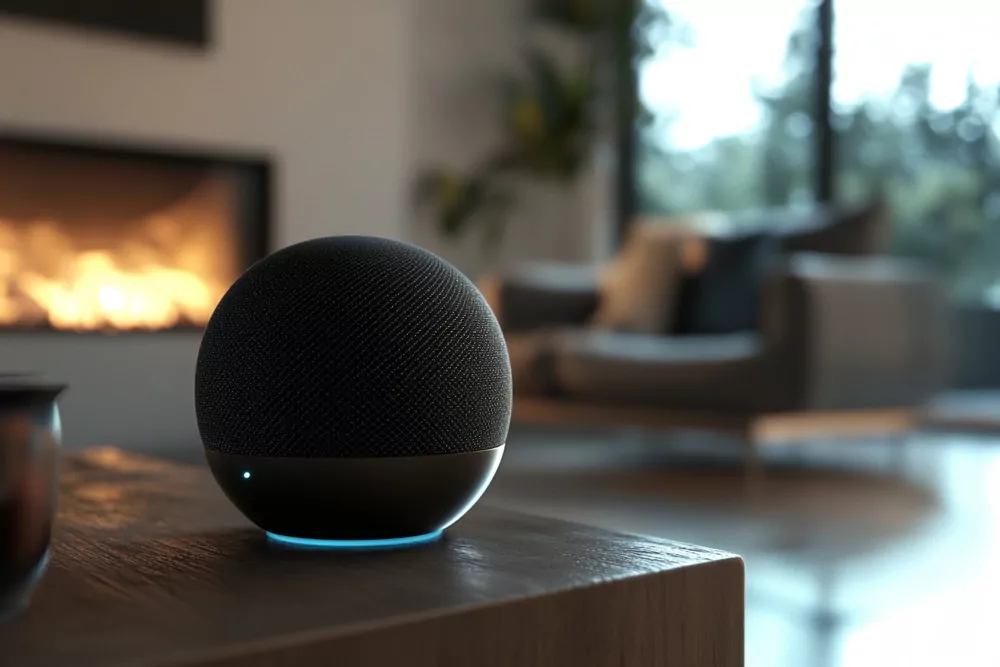


Embedded speech recognition has become a game-changer for edge-device makers and ambitious startups. A developer can turn a bare-bones board into a device that listens, understands, and responds without relying on outside servers or Google’s elusive cloud.
Where voice services once needed high-powered hardware or a monthly service bill to handle even basic commands, today’s open-source libraries and local models bring the magic directly to your own space, be it your living room, factory floor, or even a tractor in a field.
We at AJProTech have seen firsthand how this approach transforms project feasibility and safeguards precious runway for new ventures. For a practical roadmap on supported tools, hardware tips, or real case studies, check out our IoT development guide.
Why Embed Speech Recognition on Raspberry Pi 4?
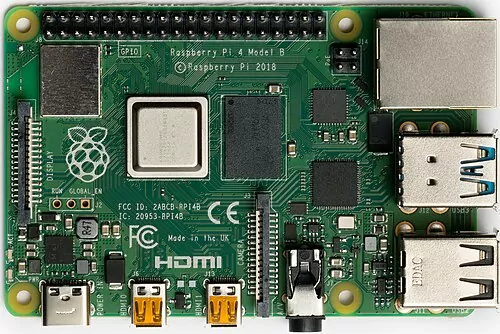
- Raspberry Pi keeps hardware spend under control, with $35–$80 covering the board, accessories, and a basic mic.
- Local speech recognition transforms ongoing operating expenses into a one-time capital cost.
- Even a modest cloud STT API can rack up hundreds per month, while a self-hosted Pi often pays for itself within weeks.
Open-source frameworks like Vosk or the Tiny version of OpenAI’s Whisper run well on the Pi 4: no cloud fees needed, no surprise price hikes, and no per-command billing. A startup can launch, demo, and sell with confidence, knowing each new device does not mean a growing services tab.
Local speech also gives developers direct control over supported languages, allowed phrases, and device behavior, making it easier and faster to adapt, experiment, and pivot.
For hardware-centric entrepreneurs, on-device voice control opens new doors for smart appliances, DIY robotics, and hands-free tools that would not survive the margin squeeze of cloud solutions.
The result? Lower risk, improved ROI, and a prototype that functions outside the lab: in mountain cabins, factory floors, or wherever Wi-Fi can’t reach and cloud services disappear.
Key Components: Wake Word, Voice Commands, and STT Module
For hands-free speech recognition, the wake word module is where the magic starts. The wake word is the digital “Hey You!” that brings the system to life.
- Runs with minimal energy using optimized signal processing.
- Never needs to ping a cloud server, saving costs and battery power.
- Engines like Porcupine or Vosk work efficiently on Pi 4 hardware.
- Since it’s all embedded, privacy is built in from the start.
That privacy is crucial for regulated sectors and privacy-savvy users, making compliance easier from the beginning.
Command Processing with Transcription Models
Once your device is awake, incoming audio goes straight to the speech-to-text (STT) module, which converts spoken words into text. The software choice here is important. Using embedded models like Whisper or Vosk, your Raspberry Pi can transcribe short voice commands with impressive accuracy.
Once set up, there’s no need to worry about network drops, since all processing happens on-device. Custom hardware integration also becomes easier from a regulatory perspective, and lets you adapt the code for accents, dialects, or multi-language projects.

Intent Recognition: From Speech to Action
Recognizing “Turn on the light” is meaningless unless your Pi actually flicks the switch. That’s where intent recognition comes in. This module connects spoken commands to real-world actions, turning your Pi from a passive listener into an active helper.
- Efficient and tailored for quick performance.
- Teams control vocabulary and business rules, not a distant service.
- Commonly built using rule-based Python scripts or lightweight classifiers.
- No user commands need to go to a remote service provider.
This direct design is perfect for real-time or mission-critical uses: robotics, remote sites, or anywhere you can’t risk lag or data leaks. With everything on-device, you cut recurring costs while keeping user data safe and sound.
Choosing the Right Model and Software for Pi 4 and Voice Projects: OpenAI Whisper, Vosk, and Other AI Tools
The world of embedded speech recognition is evolving quickly, but for Raspberry Pi projects you want models tuned for both efficiency and reliability.
| Model | Best For | Key Strengths | Main Limitations |
| OpenAI Whisper | High-quality transcription and multilingual speech recognition | Strong accuracy, broad language support, good for flexible transcription tasks | Larger models are too heavy for Raspberry Pi; smaller models are more realistic for Pi 4 |
| Vosk | Offline speech recognition on low-power devices | Low memory use, open-source, good language coverage, works well without cloud dependency | Accuracy may vary depending on audio quality, language model, and accent |
| Picovoice | Wake-word detection and intent recognition | Fast development, efficient embedded performance, useful for voice commands | More focused on commands and wake words than full transcription |
| Open-source AI toolkits | Custom voice models and startup-friendly development | No recurring cloud fees, flexible customization, useful for accents and industry-specific terms | May require more engineering work for tuning, deployment, and maintenance |
| Cloud ASR APIs | High-accuracy speech recognition with minimal local processing | Enterprise-grade performance, scalable, fast to integrate | Recurring usage costs, internet dependency, higher privacy and latency considerations |
OpenAI’s Whisper offers great transcription for many languages, but only the smaller models run well on Pi hardware. Vosk is a standout for language coverage and low memory use, with strong backing in the open-source world.
- Prioritize models that are optimized for Pi memory and CPU.
- Open-source toolkits let startups avoid costly subscriptions.
- Fixed costs come down to hardware and occasional development, not recurring cloud fees.
- Picovoice modules streamline wake-word and intent recognition, speeding up development.
Open models also enable custom training and a competitive edge, for example, adapting to tricky regional accents or industry-specific terminology.
Python Software, Command Line, and Module Integration
Getting local speech recognition up and running on a Pi 4 is refreshingly simple if you’re comfortable with Python and the command line. Most AI engines (Vosk, Whisper, Picovoice) offer easy Python APIs, so you can build your voice assistant, automation system, or smart speaker in a weekend.
Community support is robust, with lots of install guides and debugging advice. That means even lean teams can create prototypes fast. Command-line tools let you batch test, log, and try different models before committing to one in production.
- Listen for a wake word, transcribe speech, and trigger logic via GPIO pins or other interfaces.
- For extra power or improved accuracy, Pi’s USB ports can add more mics or accelerators.
- Always test in real-world conditions: noise and accents can trip up even robust systems.
Robust, private, and affordable speech recognition means a little Raspberry Pi can listen and help, no cloud or high contract needed.
Development Costs and Savings with Embedded Speech Recognition
One of the biggest surprises for startups can be the ongoing expense of cloud services for voice recognition. Every command sent to Google or another cloud provider adds another charge, and these fees quickly multiply as your user base grows.
- Embedded speech-to-text on the Raspberry Pi transforms per-utterance fees into a predictable, one-time investment.
- A standard cloud speech service might charge tens or hundreds of dollars monthly, even for modest usage.
- Models like Vosk or Picovoice run locally, eliminating API fees and avoiding surprise bills.
- Scaling to more users or wider deployments doesn’t inflate your service costs.
By managing everything in-house, you also keep user data private, perfect for brands dedicated to privacy or compliance. The technical team at AJProTech has found that a modest $40–$75 Raspberry Pi (with a suitable speaker and mic array) can last for years, far more affordably than constant monthly cloud fees.
Many open-source models are almost “plug and play,” and regular updates don’t require ongoing license payments. Curious developers can find more about proven hardware solutions and voice architectures in the IoT product development section of our site. For startups, local embedded speech recognition means you can build, test, and deploy at scale before needing to think about recurring cloud costs.
Challenges in Speech Recognition on Raspberry Pi
Running speech recognition on Raspberry Pi can help startups reduce cloud costs and build more private, offline voice interfaces. However, edge deployment also introduces technical limits that need to be addressed early. The final user experience depends on model size, latency, microphone quality, testing, and system optimization.
| Challenge | Why It Matters | How to Reduce the Risk |
| Limited processing power | Larger speech recognition models may run too slowly or consume too many resources. | Use lightweight models such as Vosk, Whisper Tiny, or Picovoice, and benchmark performance before choosing the final stack. |
| Accuracy trade-offs | Smaller models are easier to deploy but may mishear short words, accents, or unclear speech. | Test with real users, real commands, different accents, and industry-specific vocabulary. |
| Latency | Voice commands should feel instant; delays above a short threshold can make the product feel unreliable. | Optimize the full pipeline: wake-word detection, voice activity detection, speech-to-text, and command execution. |
| Noisy environments | Background noise can reduce recognition accuracy and create frustrating interactions. | Invest in good microphones, apply noise reduction, and test in realistic acoustic conditions. |
| Battery and power use | Always-on recognition can drain power quickly in portable or wearable products. | Use wake-word detection and voice activity detection so heavier models run only when needed. |
| Hardware variability | Different microphones, speakers, enclosures, and mounting positions can affect performance. | Test multiple hardware setups early and include audio performance in the prototyping process. |
| Lack of performance visibility | Without data, teams may not know why the system fails or slows down. | Add logging, Python-based benchmarks, and test scripts to monitor accuracy, latency, and resource use. |
To overcome these challenges, teams should treat embedded speech recognition as a full system design problem, not just a software choice. The model, microphone, enclosure, processor load, battery profile, and user environment all affect the final result. A practical approach is to start with a small proof of concept, measure latency and accuracy, test several microphones, and only then move toward a production-ready architecture.
For startups, this reduces the risk of building a voice product that works well in a demo but fails in real-world use. Careful benchmarking, smart model selection, and strong hardware design can make Raspberry Pi speech recognition reliable enough for commercial prototypes and early product launches.
If you are building a hardware product with embedded speech recognition, AJProTech can help you bring your voice-enabled hardware product to life. Visit the AJProTech website and explore our hardware development capabilities.