



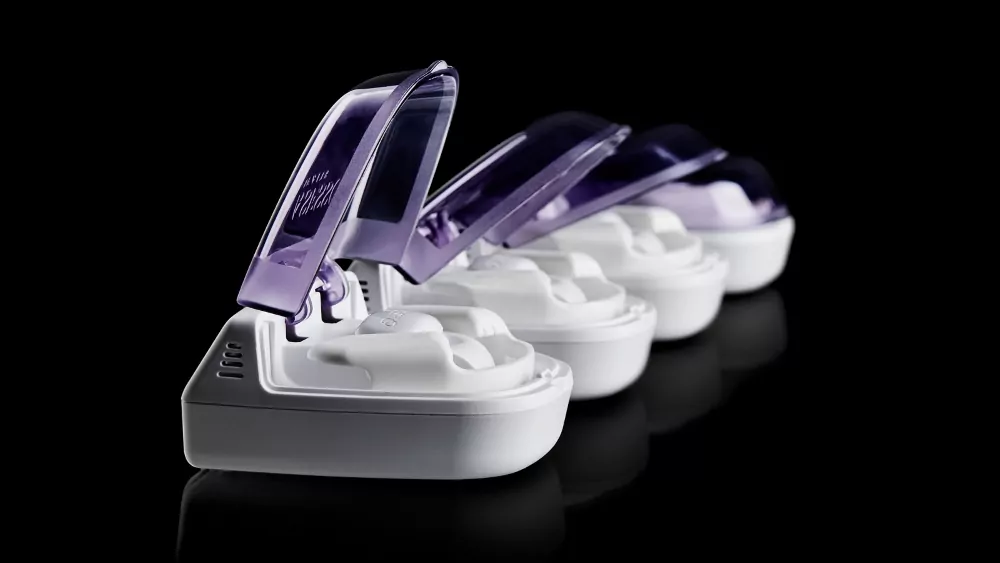
Contract Electronics Manufacturing: EMS Partner Guide
Electronics manufacturing services, or EMS, means outsourcing PCB assembly, sourcing, testing, and sometimes full product assembly to a contract electronics manufacturing partner. The real decision is not only the price per board. It is who owns component risk, quality risk, NPI risk, and engineering-change risk once the product leaves the prototype stage.
A low unit price can hide weak test coverage, unclear sourcing rules, vague change control, missing documentation, or fixture costs that appear only after the purchase order. For founders and hardware teams, an EMS quote should be read as a risk-allocation document.
A compact way to separate the roles:
| Role | What it means | What to watch |
| OEM (Original equipment manufacturer) | You own the brand and product definition. Manufacturing may be outsourced. | You still need controlled design files, BOM, test plans, and revisions. |
| ODM (Original Design Manufacturer) | The supplier provides an existing design platform or reference product. | Faster launch, but weaker design ownership and less change freedom. |
| EMS (Electronics Manufacturing Services) | The supplier builds, sources, tests, and supports production from your design package. | The package must be complete, controlled, and production-ready. |
| Client-side engineering team | Represents your technical interests during NPI and factory communication. | Valuable when your internal team is small or your manufacturer is changing. |
The engagement model also changes who carries shortages, substitutions, and coordination work.
| Model | Who buys components | Who owns shortage risk | Best fit | Hidden watchout |
| Turnkey | EMS provider | Mostly EMS, within agreed rules | Teams that want one production owner | Alternates, date codes, and traceability must be defined. |
| Consignment | Customer | Mostly customer | Programs with customer-controlled parts | One missing or wrong part can stop the line. |
| Hybrid sourcing | Shared | Shared | Early production with some controlled parts | Risk gets blurry unless the split is documented line by line. |
| PCBA-only | EMS or shared | Depends on sourcing model | Boards shipped into another system | System-level issues may be missed. |
| Box build | EMS or shared | Depends on final assembly scope | Finished products with enclosure, labels, packaging, and accessories | Mechanical fit, labels, firmware, and packaging become production risks. |
One early red flag is a quote with no DFM feedback. If a manufacturer reviews your files and gives no comments on panelization, test access, component spacing, polarity marking, or assembly risk, the review may be shallow – or the problems may be waiting until after the PO.

NPI, Quality Risk, and Production Readiness
Outsourcing electronics manufacturing can reduce internal operational load and give teams access to specialized process knowledge. The benefit becomes visible after the first purchase order, when sourcing, testing, quality, documentation, and schedules all need to stay aligned.
The practical advantages can include:
- Faster movement from prototype to pilot run.
- Access to PCB assembly and box-build experience.
- Better supply chain coordination.
- Operating quality systems.
- Easier scale-up when demand changes.
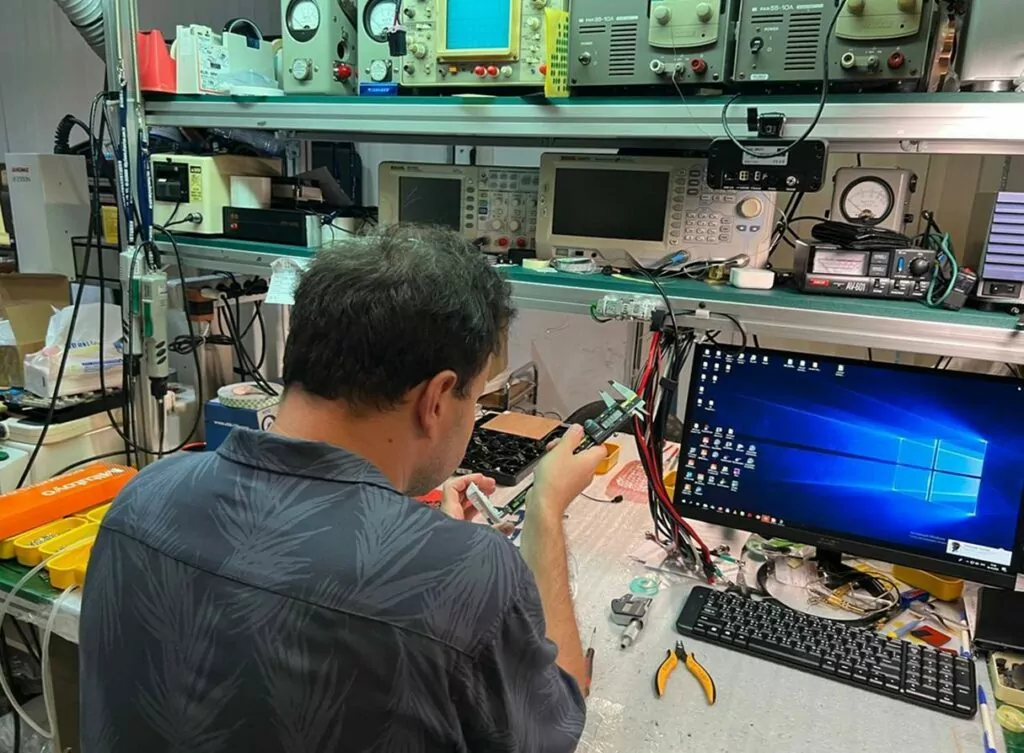
But outsourcing is not automatically cheaper or safer. A weak EMS partner can create more management overhead than an internal team. Most production failures begin with small ambiguities that nobody clearly owns.
Acceptance standards should be defined before production starts, because they set the workmanship expectations used by the EMS partner, inspectors, and client-side engineering team:
| Standard / class | Practical meaning |
| IPC-A-610 Class 1 | General electronic products with wider tolerance for workmanship issues. |
| IPC-A-610 Class 2 | Common commercial standard for products that need reliable performance over time. |
| IPC-A-610 Class 3 | High-performance or critical products where continuous reliability matters. |
| IPC-J-STD-001 | Soldered electrical and electronic assembly requirements. |
The full specifications are published by IPC and can be found through the IPC Online Store, where IPC-A-610 and IPC-J-STD-001 are listed as the core assembly acceptance and soldering-process standards.
A controlled NPI process is how teams reduce production risk before volume assembly exposes every weak point.
A practical NPI sequence:
- Run EVT: Check whether the prototype works electrically and functionally.
- Run DVT: Validate the product against environmental, mechanical, user, and compliance-related requirements.
- Review DFM and BOM risk together: A part can work electrically and still be a poor production choice. If you need a refresher on BOM structure and why it affects sourcing clarity, this guide on the bill of materials is worth reviewing first.
- Define the test plan: Decide where AOI, SPI, ICT, FCT, X-ray, programming verification, and inspection apply.
- Create a golden sample: Lock one approved reference unit with revision records, firmware version, labels, and inspection criteria.
- Write work instructions: Operators, inspectors, and technicians need the same controlled document set.
- Control ECOs: Every engineering change order needs approval, revision impact, effective date, and line tracking.
- Run PVT and pilot production: Validate that the manufacturing process can repeat, not just that the design works.
- Gate production readiness: Release volume only after sourcing, yield, documentation, and change control are stable.
A prototype can work beautifully and still be unready for production. NPI is the stage where design, sourcing, test, documentation, and factory execution are forced to agree.
Choosing the Right EMS Partner and Managing the Factory Side
The right EMS partner should match your product category, volume range, test needs, quality expectations, and communication style. A top-manufacturer list rarely solves this. Revenue tells you scale, not whether your product will get disciplined NPI support.
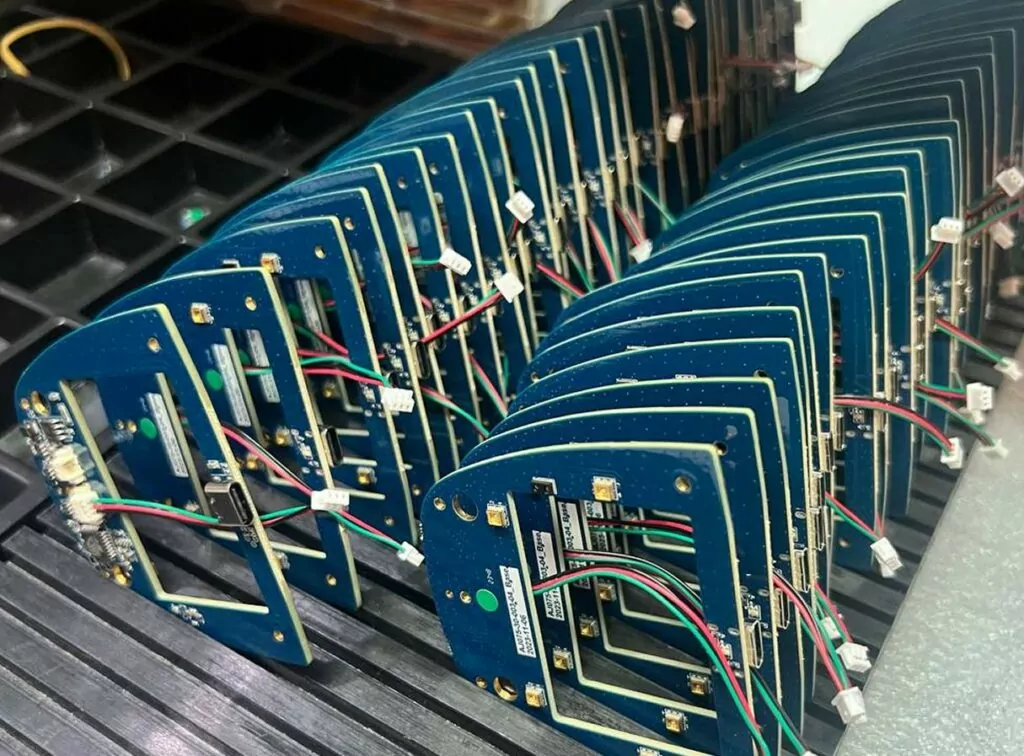
Large providers can work well for stable, high-volume programs with mature documentation. Smaller providers may be better for pilot runs, change-heavy products, or teams that need closer engineering communication. The useful sourcing rule is simple: build a shortlist around fit, then audit that fit.
Use the risk-owner check for every major manufacturing task:
- Who owns the decision?
- Who documents it?
- Who approves changes?
- Who is accountable when it fails?
| Criteria | What to check | Why it matters |
| Industry and volume fit | Experience with similar products and the right build stage: prototype, pilot, low-volume, or scale production. | A factory can be strong in one category or volume range and weak in another. |
| NPI support | Willingness to review files, challenge risks, support pilot builds, and manage early production issues. | Early production problems are cheaper to fix before volume manufacturing starts. |
| DFM feedback | Specific comments on panelization, test access, component spacing, assembly risk, and documentation gaps. | Silence during quoting often means the review was shallow. |
| Test coverage | AOI, SPI, ICT, FCT, X-ray, programming verification, final inspection, and traceability. | Inspection alone rarely catches every failure mode. |
| Quoting transparency | Clear NRE, tooling, fixtures, MOQ, assumptions, exclusions, and change-handling rules. | The real cost is the total program cost, not only the unit price. |
| Supply chain and change control | Approved alternates, shortage handling, date-code control, revision tracking, and ECO discipline. | Component substitutions and undocumented changes are common sources of production failure. |
Red flags include:
- Refusal to show the production line or process controls.
- A quote far below the rest of the market.
- Vague NRE with no breakdown.
- No detail on test coverage.
- Poor revision and change-control discipline.
- Unclear subcontracting.
- Clean sample areas that do not reflect the actual production floor.
This is where a client-side engineering representative can pay for itself. That role protects the product when the internal team is too small to run NPI tightly, when a supplier transition is underway, or when sourcing, firmware, mechanics, and tests are all changing at once.
If you are comparing domestic and offshore options, this piece on reshoring electronics manufacturing helps frame the trade-offs.
AJProTech develops products, runs feasibility work, supports NPI, reviews DFM issues, and manages day-to-day communication with manufacturing partners in China, Taiwan, Mexico, and the USA.
AJProTech’s model fits:
- Founders approaching their first production run.
- Enterprise teams replacing a contract manufacturer.
- IoT teams with firmware, connectivity, and app dependencies.
- Medical device teams with tighter documentation expectations.
- Consumer electronics teams balancing cost, speed, and user-facing quality.
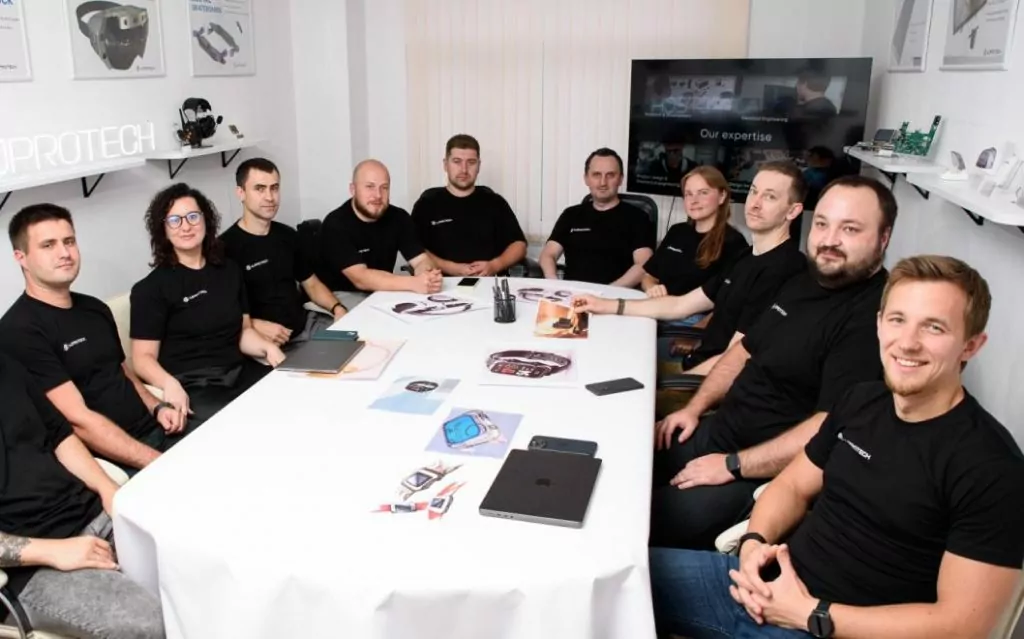
With 45 engineers, more than 55 commercial hardware projects, over 400,000 units manufactured through partners, and an in-house prototyping lab with PCBA assembly support, AJProTech helps teams keep BOM risk, prototype revisions, test plans, pilot runs, and factory feedback connected.
Risk never disappears in electronics manufacturing. It moves to the team with the clearest documents, strongest test discipline, and best habit of catching small changes before they become expensive ones.
FAQ
Who is the world’s largest contract electronics manufacturer?
By revenue, the world’s largest electronics contract manufacturer is Hon Hai Precision Industry Co., Ltd., better known as Foxconn. In the 2025 EMS & ODM Global 100 ranking by in4ma and EMSNOW, Foxconn ranks first with about $260 billion in 2025 revenue.
Other companies near the top of that ranking include Wistron, Quanta Computer, Luxshare Precision, Pegatron, Jabil, Flex, BYD Electronics, Compal, and Huaqin Technology.
That said, the largest EMS provider is not always the best fit for every hardware team. Global leaders like Foxconn are built for scale, mature documentation, and large-volume programs. Startups and mid-market hardware teams often need stronger NPI support, faster engineering feedback, clearer communication, and a partner that is better suited to pilot, low-volume, or change-heavy production.
What certifications should an electronics contract manufacturer have?
ISO 9001 is the common baseline for quality management. ISO 13485 matters for medical devices, AS9100 for aerospace programs, and DDTC registration matters when ITAR-controlled defense work applies. IPC workmanship standards also matter. The right mix depends on your product category, compliance exposure, and customer acceptance requirements.
What is usually included in NRE for electronics manufacturing?
NRE means non-recurring engineering: one-time setup work required before repeat production begins. It often includes stencil or fixture work, test fixture development, programming steps, work instructions, DFM review, first article inspection, and process validation. If NRE is vague or rolled into a lump sum, quoting risk goes up.
Is turnkey or consignment better for a first production run?
Turnkey often reduces purchasing workload when the EMS has strong supply chain control and clear substitution rules. Consignment can make sense when you must control sensitive parts or approved suppliers. Many first runs land in a hybrid model until the BOM, test process, and sourcing strategy stabilize.
Can AJProTech replace my EMS provider?
AJProTech does not replace EMS by becoming a factory. We act as the client-side engineering team that develops the product, runs NPI, reviews DFM issues, manages manufacturer communication, and coordinates production partners. That gives you technical representation during assembly, testing, pilot builds, and engineering changes.