


The real value of combining AI and IoT appears when connected devices stop acting as isolated sensors and start working as an intelligent system. IoT hardware collects real-world data, while AI turns that data into decisions, alerts, and automated actions.
- Smart warehouses — Sensors monitor temperature, humidity, vibration, movement, and equipment status. AI analyzes these signals to detect early machine failure, optimize storage conditions, and support predictive maintenance.
- Cold-chain logistics — IoT trackers follow shipment location and temperature in real time. AI helps predict spoilage risks, recommend route changes, and alert teams before product quality is compromised.
- Smart agriculture — Soil sensors, weather stations, and irrigation systems collect field data. AI decides when to irrigate, how much fertilizer to apply, and which areas need attention first.
- Industrial manufacturing — Connected devices measure vibration, heat, pressure, and energy use across production lines. AI identifies signs of equipment wear, process instability, or possible defects before they cause downtime.
- Smart buildings — Sensors track occupancy, air quality, lighting, temperature, and energy consumption. AI adjusts HVAC, lighting, and ventilation based on real usage instead of fixed schedules.
- Health and wellness wearables — Wearable sensors collect data such as heart rate, motion, skin temperature, and sleep patterns. AI turns this data into personalized insights, recovery trends, and early warning signals.

In a competitive landscape, being able to automate what once took manual effort isn’t just about cutting costs: it’s about agility, better service, and standing out. As regulations evolve and more AI models become available, this synergy will keep turning new ventures into major industry players.
For those interested in the practical details, we at AJProTech have broken down affordable approaches to IoT product development to help address these cost challenges for startups.
Benefits and Cost Factors: Using AI and IoT Together for Startups
Cutting costs is often the first goal for startups merging AI and IoT. A large part of IoT development cost occurs early: buying hardware, designing sensor networks, writing firmware, and securing cloud connections. Even after the first prototype, there are ongoing payments for cloud fees, device certification, and, inevitably, debugging.
AI solutions can directly reduce these expenses:
- Machine learning minimizes the need for manual sensor calibration: systems learn and adjust themselves in software.
- Smarter hardware choices informed by predictive modeling help avoid over-designing and overspending.
- Simulation models use AI to find performance issues before anything is physically built, saving many hardware revisions.
- Edge AI processes sensor data on the device, cutting down expensive data transfer and cloud storage.
- Pre-built AI tools and open-source libraries reduce the need for hiring specialized AI teams.
As a result, AI doesn’t add cost; used well, it can reduce development spend by up to 30%, especially in cases like computer vision or predictive maintenance that generate large amounts of data. For startups, this is often the difference between getting to market and running out of runway.
Key Operational Advantages of Integrating AI with IoT
Beyond saving money, integrating AI with IoT unlocks valuable operations benefits, as well as bringing new challenges:
| Area | Advantage | Challenges | How to Reduce the Risk |
| Sensor data intelligence | Turns raw sensor readings into actionable insights for faster decisions. | Poor-quality or incomplete data can produce weak predictions and false alerts. | Calibrate sensors carefully, define which data matters, and test models in real environments before production. |
| Predictive maintenance | Helps detect equipment wear early, reducing surprise breakdowns and unnecessary downtime. | Models need enough historical data to become reliable. | Start with simple rule-based alerts, collect device data over time, then improve the model gradually. |
| Trend and anomaly detection | Identifies unusual behavior, usage trends, and performance issues quickly. | Too many alerts can overwhelm small teams. | Rank alerts by severity, set clear thresholds, and group lower-priority issues into periodic reports. |
| Automated responses | Enables “self-healing” systems that can restart, reroute, or adjust settings automatically. | Over-automation can cause unexpected behavior if the system reacts incorrectly. | Keep human approval for high-risk actions, add fallback modes, and log every automated decision. |
| Resource management | Optimizes energy use, network traffic, device workload, and cloud costs. | Optimization logic can become complex and hard to maintain. | Focus first on the biggest cost drivers, such as battery drain or cloud usage, and start with simple rules. |
| Scalability | Helps small teams manage more devices, users, and data without expanding operations too quickly. | Failures become harder to diagnose as the system grows. | Build in monitoring, logging, remote diagnostics, and over-the-air update capability from the start. |
Why Startups Should Use AI and IoT Technologies
Startups often walk a tightrope: resources are stretched, deadlines are tight, and any misstep can be costly. Adopting AI and IoT gives founders business advantages that big companies often take for granted. Using AI-powered IoT devices, young companies can offer smarter, more valuable products right from the start.
AI-driven optimization saves money on power, bandwidth, and preventive maintenance, turning cost control into a growth driver rather than a limitation. Even complex compliance tasks become easier: AI can track device data flows and flag risks early.
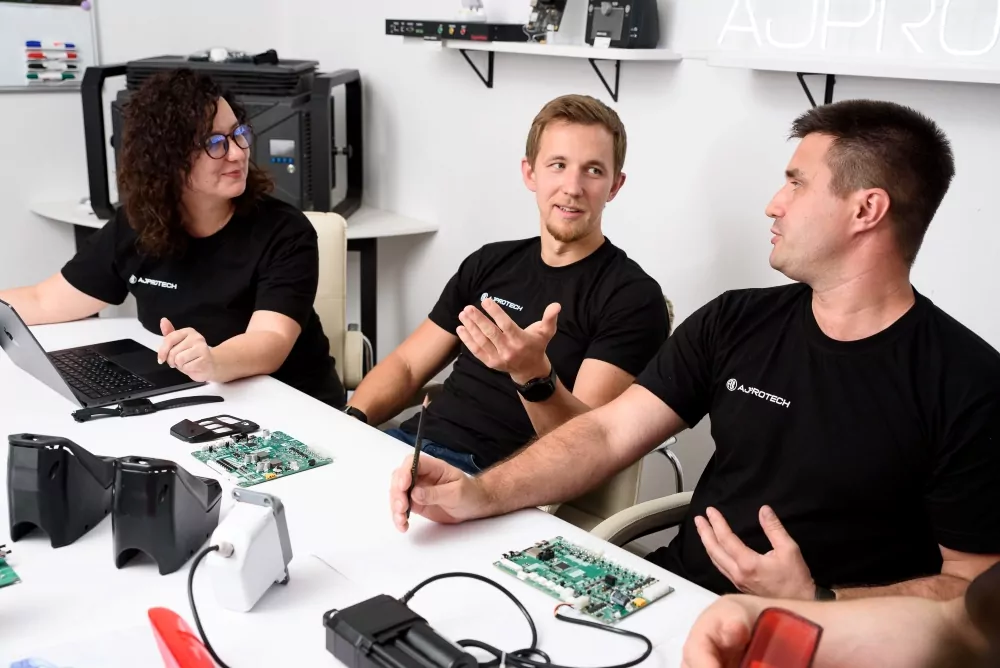
At AJProTech, we’ve used this knowledge to help new ventures accelerate to market and win their first customers. By choosing open-source AI tools, robust IoT sensors, and scalable platforms, startups gain the reach of a tech giant, without the giant budget.
Real Applications of AI in IoT Systems
In smart agriculture, AI and IoT team up to optimize water and power use. Sensors track soil conditions and weather; AI decides when to irrigate based on the data. The result: higher harvest yields, less waste, and lower costs. Staffing needs shrink, and startups can scale quickly.
Logistics also benefit: IoT trackers monitor shipments, temperatures, and routes. AI analytics can reroute deliveries, prevent spoilage, and coordinate fleets, all while minimizing manual involvement. Startups using pre-built AI models can launch advanced features with less development time and better flexibility, key for winning customers.
Common benefits across these industries include:
- Automatic anomaly detection before problems become expensive.
- Dynamic resource allocation based on real-time conditions.
- Lower operational costs through reduced manual work.
- Faster scaling for startups using ready-made AI models.
- Better service quality through smarter, data-driven decisions.
These applications show how data-driven operations make management easier and more affordable for new ventures. AI chips away at hidden costs and helps startups move fast, pivot smart, and deliver quality.
Technical Barriers to Implementing AI and IoT
| Technical Barrier | Why It Creates Problems | How to Overcome It |
| Hardware complexity | IoT devices require sensors, processors and communication modules, which increase cost and design difficulty. | Start with a hardware feasibility study to validate architecture, components, power needs, and cost before full development. |
| Sensor and connectivity choices | Choosing the wrong sensor placement, calibration method, or wireless protocol can delay development and hurt performance. | Use early prototypes and machine learning feedback to optimize sensor placement, calibration, and connectivity decisions faster. |
| Large data streams | Dozens of connected devices can generate heavy data flows that are expensive and difficult to manage. | Define a clear data strategy early: decide what should be processed locally, what should go to the cloud, and what data is actually useful. |
| Cloud vs. edge AI decisions | Cloud platforms offer power and flexibility, but can increase latency, cost, and dependency on connectivity. | Use edge AI for simple, real-time tasks and cloud processing for heavier analytics, training, and long-term optimization. |
| Limited development resources | Startups may not have time or budget to build every AI and IoT layer from scratch. | Use open-source edge AI platforms, pre-built models, and modular IoT frameworks to accelerate development. |
| Team skill gaps | Hardware engineers may not be data scientists, and ML experts can be difficult or expensive to hire. | Combine cross-functional workflows with AI tools that automate data handling, model optimization, device monitoring, and fleet management. |
Building robust IoT systems that use artificial intelligence is like solving a puzzle with shifting pieces. The first challenge is hardware: IoT devices need sensors, processors, communications chips, and often batteries. Every feature adds complexity and cost to the process, especially in the design and prototype phases.
For startups, even picking the right sensor or connectivity option can consume days of limited team time (and coffee). Here, AI makes a difference: with machine learning, early choices in sensor placement or calibration can be improved quickly, using feedback from even a few devices to optimize design fast.
Software forms the next barrier. Training AI models may sound glamorous, but handling huge data streams from dozens of devices takes time and cloud resources. Startups must decide: should they invest in cloud platforms or train simple, efficient models on the device to avoid rising costs?
Tools like open-source edge AI platforms help by letting teams skip straight to building value, rather than reinventing the wheel. To manage hardware costs and avoid surprises, starting with a hardware feasibility study is often wise.
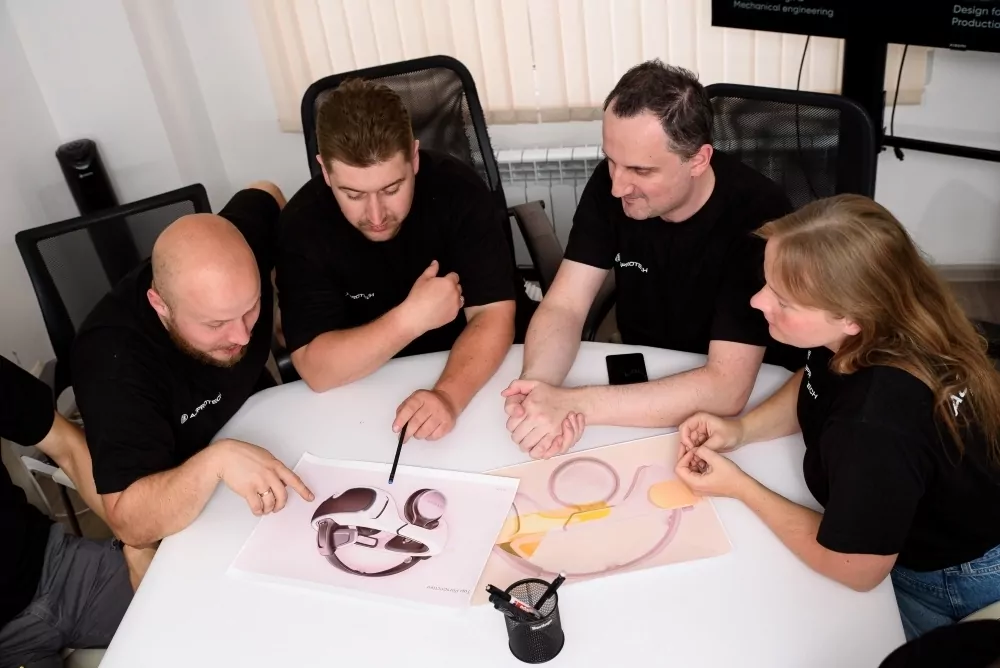
Lastly, team skills can be a hurdle. Machine learning experts aren’t always easy to hire, and hardware engineers may not be data scientists. Startups often blend roles and rely on AI tools that automate data handling or device management, letting small teams keep up with much larger operations.