



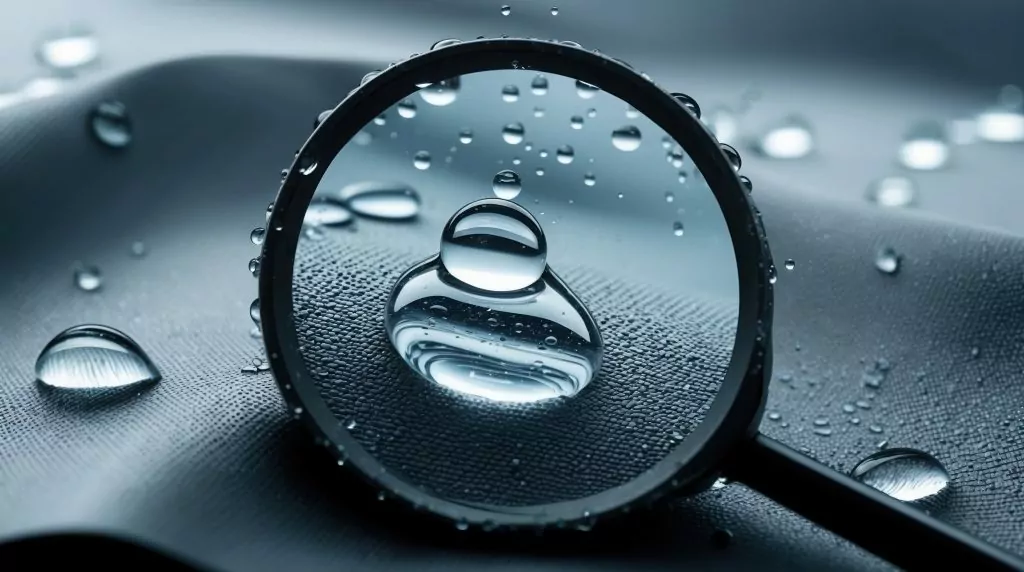
An IP rating describes how a specific enclosure assembly was tested against solids and liquids. It does not describe every possible wet, dusty, hot, or abusive real-world condition.
For founders, CTOs, and hardware teams, the key point is simple: choose the IP rating based on the product’s real exposure, not because a higher number looks better on a spec sheet.
A rating does not automatically prove that the product can survive:
- Water jets or pressure washing.
- Long-term submersion.
- Hot water, salt water, soap, sweat, or sunscreen.
- Seal aging, gasket wear, or repeated service.
- Connector, adhesive, gasket, or assembly changes after testing.
| Rating | What it tests | What it does not prove | Practical use |
| IP65 | Dust-tight + water jets | Immersion | Outdoor splash, spray, and rain exposure. |
| IP66 | Dust-tight + powerful water jets | Immersion | Stronger spray or washdown environments. |
| IP67 | Dust-tight + temporary immersion up to 1 meter for 30 minutes | Water jets, deeper immersion, long-term submersion | Products that may be dropped into water briefly. |
| IP68 | Dust-tight + immersion beyond IPX7 under declared conditions | Water jets unless separately tested | Products needing stated depth and duration beyond IP67. |
| IPX7 | Temporary immersion up to 1 meter for 30 minutes | Dust protection | Water-only testing where solids are not declared. |
| IPX8 | Immersion under declared conditions | Dust protection and jets unless tested | Products where immersion matters more than dust. |
| IP69K | High-pressure, high-temperature spray | Deep immersion unless separately tested | Road-vehicle, industrial, and washdown environments. |
The most common misunderstanding is assuming IP68 includes every lower rating. It does not. A product can pass immersion testing and still fail under spray, jets, thermal cycling, or worn seals.
The better question is: what exact exposure must the product survive in the field?
/
Designing an IP-Rated Assembly That Can Survive Testing
An IP67 or IP68 result starts in CAD, materials, and assembly planning long before the sample reaches a lab. The sealing strategy must be designed into the product, not added late with a gasket.
A credible sealed assembly depends on:
- Controlled sealing geometry.
- Stable gasket compression.
- Housing stiffness and flatness.
- Material compatibility with heat, UV, sweat, oils, and cleaning chemicals.
- Tolerance control across molded parts, fasteners, adhesives, and membranes.
- Repeatable assembly in production.
Common sealing methods include:
| Joining method | Advantages | Main risks |
| Screws and gasket | Serviceable and familiar | Sensitive to torque, creep, gasket wear, and repeated opening |
| Ultrasonic welding | Good for permanent plastic seams | Requires careful joint design and wall consistency |
| Adhesive bonding | Useful in compact products | Bond-line control and aging become critical |
| Potting compound | Can protect electronics from liquid intrusion | Adds weight, complicates repair, and may worsen thermal behavior |
Interfaces are usually the weakest points. Water often enters through openings, moving parts, or pressure-management features rather than through the main housing wall.
High-risk areas include:
- USB ports, barrel jacks, SIM doors, battery doors, and service panels.
- Microphones and speakers that require acoustic membranes.
- Buttons, LEDs, sensor windows, and cosmetic light pipes.
- Cable exits, antenna windows, and charging contacts.
- Vent membranes used to equalize pressure.
Removing a connector can sometimes reduce ingress risk more than improving the gasket. For wearables and outdoor IoT devices, pogo-pin charging or wireless charging may be safer than a user-accessible port. This guide to mechanical design is a great starting point to delve into the intricacies of different approaches.
Testing, Certification, and Choosing the Right Protection Level
IP certification applies to the tested assembly, not to the product idea. If you change the gasket, plastic grade, adhesive supplier, connector, assembly order, or enclosure geometry, the previous result may no longer represent the product you are shipping.
Good teams do not wait for the certification lab to discover leaks. They test early during prototype development and keep ingress protection aligned with EVT, DVT, and PVT.

A practical validation plan may include:
- Bench immersion testing on early prototypes.
- Thermal cycling before and after immersion.
- HALT testing to expose weak joints, seals, and membranes.
- Button, door, and charging-interface cycle testing.
- Drop or vibration testing before immersion.
- Repeated opening and closing tests for serviceable housings.
- Incoming QA checks for gaskets, membranes, adhesives, and molded parts.
The rating must also survive manufacturing variation. A sample can pass the lab test while production units fail because of torque variation, adhesive cure spread, molded-part distortion, or supplier changes.
Production controls should cover:
- Seal material traceability.
- Gasket and membrane inspection.
- Torque tools and fastening sequence.
- Adhesive process control.
- Retesting after meaningful design or supplier changes.
- Clear service instructions for any removable parts.
The right protection level should be chosen before tooling. Define the environment first: rain, splash, immersion, spray, washdown, temperature cycling, service access, and expected product life. Then choose IP65, IP67, IP68, IP69K, or a combination of tests that matches the actual exposure.
For connected hardware, outdoor devices, wearables, and industrial IoT products, the goal is not to chase the highest rating. The goal is to design the right sealed assembly for the real use case, manufacturing process, and validation plan. The correct material selection at every design stage is fundamental for reaching this goal.
AJProTech can help teams review enclosure strategy, sealing architecture, prototype validation, and production readiness before tooling is locked.
FAQ
Can IP67 withstand heavy rain?
Yes, an IP67-rated product should generally tolerate rain because it is tested for dust and temporary immersion. Heavy rain is still not the same as a jet test. If your product faces driven rain, hose spray, or repeated directional water impact, evaluate IPX5 or IPX6 exposure as a separate requirement.
Is IP67 waterproof safe for showers?
Usually, you should avoid making that promise based on IP67 alone. A shower adds warm water, pressure, steam, soap, and repeated exposure, none of which is fully represented by the standard IP67 immersion test. For product teams, AJProTech validates shower safety as its own use case, with the exact assembly and chemistry.
Can IP67 waterproof speakers be used for swimming, beach days, and showers?
Sometimes they survive those situations, but the rating alone does not prove it. Swimming adds motion and repeated immersion, beach use adds sand and sunscreen, and showers add pressure and soap. At AJProTech, we validate speaker membranes, charging contacts, adhesive joints, and acoustic openings against the real environment before making that claim.
Does an IP rating last forever?
No. An IP rating does not last forever by default because seals age, gaskets lose compression, adhesives degrade, and ports or membranes can be damaged. The rating applies to the tested configuration. Long-term reliability depends on materials, assembly control, inspection, service procedures, and retesting after meaningful design or supplier changes.
Why can an IP67 prototype fail after a small design change?
Because small changes can alter seal compression, housing stiffness, tolerance stack-up, membrane bonding, or screw load. A new plastic grade, connector revision, adhesive change, or torque setting can shift the enclosure out of its validated window. In product development, that revised build should be treated as a new validation case.